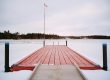
When temperatures drop and Canadian lakes start to freeze, docks face their toughest challenge of the year. Ice can shift, expand, and move with tremendous force—enough to twist metal, crack wood, and pull anchors from the lakebed. Every year, homeowners across Manitoba, Saskatchewan, and Northwest Ontario face costly repairs that could have been prevented with proper preparation.
Protecting your dock from ice damage isn’t complicated, but it does take some planning. Here’s how to safeguard your investment and ensure it’s ready for many more summers to come.
Why Ice Damage Happens
Ice expands as it forms and contracts as it melts. This constant movement creates pressure on anything in or near the water. As sheets of ice shift, they can drag against pilings, twist floating sections, and tear apart anchoring systems. In shallow areas, ice can freeze solid around dock legs and crush them as it moves.
The key to prevention is flexibility and forethought. Docks that can adjust to changing conditions—or be removed before freeze-up—stand the best chance of surviving winter intact.
Step 1: Know Your Lake’s Ice Patterns
Every lake freezes differently. Shallow lakes freeze faster and thicker, while deeper waters may stay open longer near the center. Wind exposure, current flow, and nearby springs can all affect how ice forms. Understanding these patterns helps you choose the right protection strategy for your dock.
Talk to your neighbors or local marina—they’ll know how the ice behaves in your specific area. Learning from their experience can save you from repeating expensive mistakes.
Step 2: Choose a Flexible Dock System
Floating docks are naturally more resistant to ice damage than fixed ones because they move with changing conditions. Modular docks made from polyethylene or aluminum frames can be detached or pulled out for winter storage.
If you’re building new, consider a system that can be adjusted seasonally. Removable docks or hinged ramps make it easier to pull sections out in fall and reinstall them in spring.
Step 3: Remove What You Can Before Freeze-Up
The most effective way to protect your dock is to get it out of harm’s way. Before the first hard freeze, remove your dock—or at least its most vulnerable parts—and store them onshore. Lightweight aluminum and plastic docks are ideal for this approach since they’re designed to be modular and easy to move.
If you can’t remove the entire structure, detach accessories like ladders, bumpers, and decking panels. The less surface area exposed to ice, the better.
Step 4: Raise or Float Your Dock in Deep Water
If removing your dock isn’t possible, move it into deeper water where ice movement is less aggressive. Ice near the shoreline exerts the most pressure because it attaches to land and expands outward. By positioning your dock in deeper areas, you reduce direct contact and allow it to rise and fall with the ice.
Use adjustable cables or winches to raise the dock slightly above normal water levels. This helps prevent the ice from freezing solid around the frame.
Step 5: Use Bubblers or De-Icers for Added Protection
Bubblers and de-icers work by circulating warmer water from below the surface, preventing ice from forming near your dock. These devices are especially useful in marinas or for docks that can’t be easily removed.
When installing a bubbler system:
– Position it to create gentle movement rather than turbulence.
– Use a thermostat or timer to run it only when temperatures drop below freezing.
– Ensure it’s safe for use in your area—some lakes restrict bubbler systems to protect fish habitats or prevent uneven ice conditions for snowmobilers.
Step 6: Check Anchors and Connections
Anchoring systems often take the brunt of winter stress. Inspect all chains, cables, and helical anchors before freeze-up. Make sure they’re strong, flexible, and allow the dock to move slightly with ice expansion.
Replace any worn parts and add protective sleeves or rubber connectors where metal meets metal. A dock that can “give” under pressure is far less likely to break apart.
Step 7: Protect Pilings and Shoreline Points
If you have a fixed dock, wrap pilings with heavy-duty PVC sleeves or rubber bumpers to reduce friction as ice shifts. Shore connections should also be reinforced with flexible joints or hinges to absorb movement.
For wooden pilings, apply an eco-safe sealant before winter. This reduces water absorption and protects against rot caused by trapped moisture.
Step 8: Watch Out for Spring Thaw
Ice damage doesn’t end when temperatures rise. During the thaw, large ice sheets can drift unpredictably and collide with docks still anchored in the water. Keep an eye on conditions and remove protective equipment only when the ice has completely melted.
After thaw, inspect everything again—especially fasteners, anchors, and flotation barrels. Early spring is the best time to make any necessary repairs.
Mistakes to Avoid
– Leaving a dock rigidly anchored or fixed in shallow water.
– Using untreated wood or non-galvanized fasteners that corrode under ice stress.
– Ignoring early cracks or shifting after the first freeze.
– Forgetting to mark your dock with reflectors or poles for winter visibility.
Bonus Tip: Use Natural Shoreline Protection
Planting native vegetation near your dock helps reduce ice heave and erosion by stabilizing soil and absorbing wave energy. It’s a simple, eco-friendly way to protect both your property and the lake ecosystem.
Why Prevention Is Worth It
Replacing a dock damaged by ice can cost thousands, not to mention the loss of your summer plans while repairs are underway. Preventative care each fall is far more affordable and ensures your dock stays safe year-round.
Whether you pull your dock out each winter or leave it floating in deep water, consistency is key. A few hours of prep before freeze-up means you’ll be back on the water faster when spring returns.
Conclusion
Protecting your dock from ice damage isn’t just maintenance—it’s preservation. With the right mix of preparation, flexible design, and timely care, your dock can withstand even the harshest Canadian winters.
For expert advice or help designing a dock built to handle our climate, connect with Nor Col Dock Solutions. Contact us or follow us on Facebook for updates, lakefront tips, inspiration, and project ideas.
Nor Col Dock Solutions (formerly Nor Col EZ Dock) proudly serves Central Canada, Kenora, Saskatchewan, Manitoba, and Northwest Ontario—helping lakefront homeowners protect their docks and enjoy worry-free waterfront living all year long.