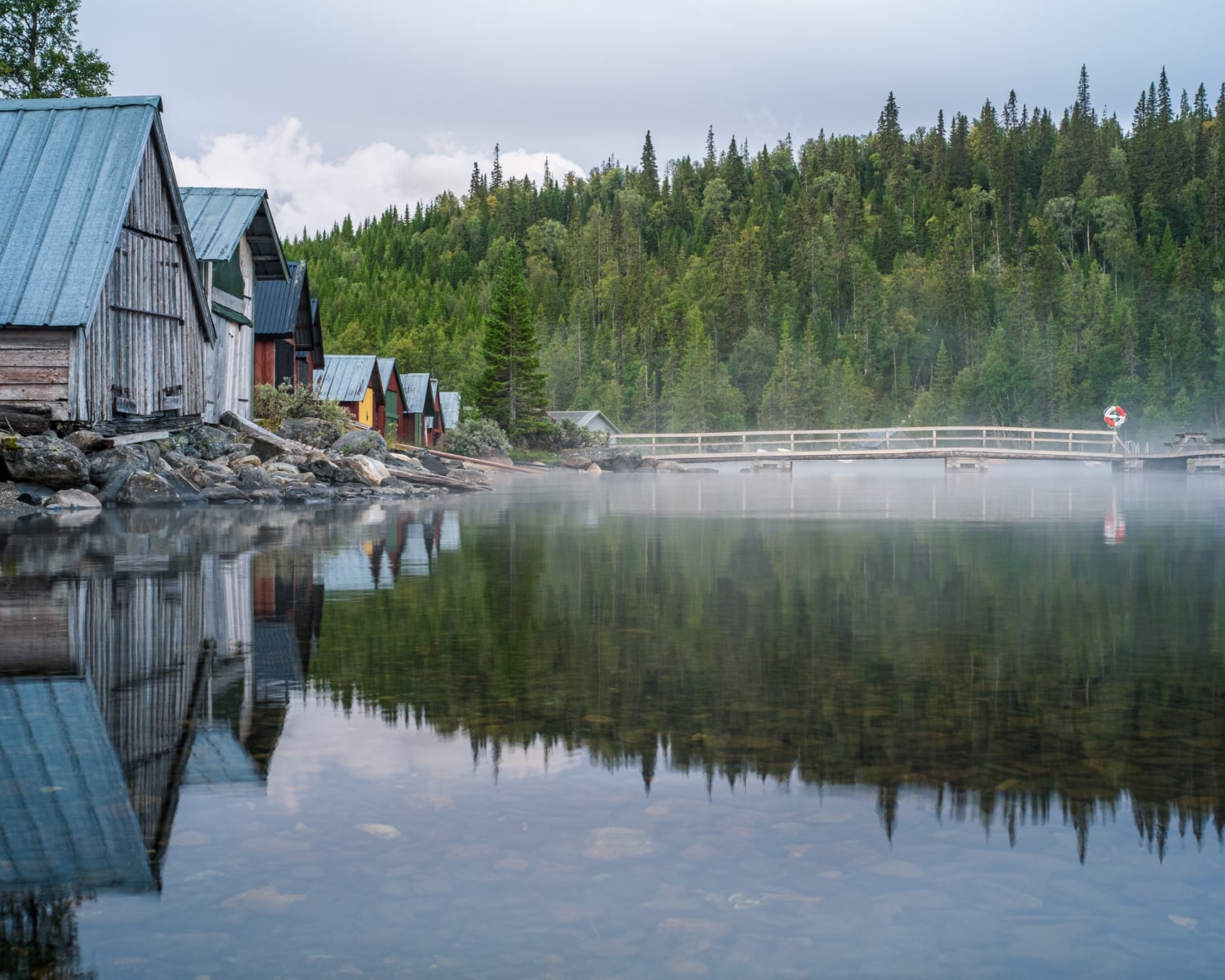
The first trip down to the water often sets the rhythm for an entire cottage day. Someone carries a mug of coffee to the dock while the lake is still calm. A child arrives with a fishing rod, followed by another family member dragging a kayak toward shore. Before long, towels, paddles, life jackets, and water toys have gathered near the water’s edge.
At a Whiteshell Provincial Park cottage, this daily movement between land and water should feel natural. Yet many waterfronts make it harder than it needs to be. Exposed rock can become slippery. Steep paths may challenge older family members. Shallow water can leave boats and paddlers struggling through weeds or mud. A dock that worked for one couple years ago may no longer serve a growing, multigenerational family.
Improving access does not mean turning a beautiful shoreline into a marina. In most cases, the best changes are thoughtful and modest. A safer path, a better transition from shore to dock, a dedicated place to launch a kayak, or a layout that separates swimmers from boats can transform how people use the waterfront.
The goal is simple: make getting to the lake easier while preserving the natural character that made you fall in love with the property.
Begin With the Shoreline You Already Have
Every Whiteshell waterfront has its own personality. Some cottages sit above clear, deep water bordered by granite. Others face sheltered bays with gradual bottoms, reeds, or soft sediment. Wind exposure, wave action, seasonal water changes, and winter ice can vary considerably from one lake or bay to another.
Before changing anything, spend time watching how the waterfront behaves. Notice where water runs after heavy rain and where ice movement leaves marks in spring. Look at how waves approach the shore during strong winds. Pay attention to the depth along the dock and the places where people naturally enter the water. These observations often reveal more than a quick measurement taken on a calm afternoon.
One thing we have learned is that water access problems often begin on land. A dock may be stable, but the route leading to it is steep, uneven, or poorly drained. Family members then arrive at the water already off balance, usually while carrying equipment. Improving the full journey from cottage to lake creates a better result than focusing on the dock alone.
Any project within a provincial park may also involve rules governing structures, shoreline alterations, vegetation, or construction. Confirm current requirements with Manitoba Parks and other applicable authorities before removing vegetation, changing the shoreline, or installing a new structure.
Create a Safer Route From Cottage to Water
A good waterfront path should feel secure in wet conditions without overpowering the landscape. On sloped or rocky lots, that may mean adding broad, evenly spaced steps with a sturdy handrail. On gentler terrain, a compacted path with proper drainage may provide enough stability while maintaining a natural appearance.
Avoid loose materials that can shift underfoot or wash toward the lake. Large, stable stepping surfaces generally work better than small stones on a busy route. Where tree roots cross the path, good lighting and a visible edge can reduce trips without requiring extensive clearing. Low-level fixtures are usually enough to guide people back to the cottage after sunset.
Resting points also matter on longer or steeper approaches. A small landing or bench gives an older adult a place to pause and provides a convenient spot for setting down coolers or paddling equipment. Handrails should continue through the areas where people are most likely to lose balance, especially at stairs and the transition onto the dock.
Drainage deserves particular attention. Water flowing down a cottage path can carry soil into the lake and make the walking surface slippery. Directing runoff away from the main route and protecting existing shoreline plants can help keep both the path and waterfront stable. Nor Col’s guide to preventing shoreline erosion around a dock explains why vegetation and drainage are important parts of waterfront planning.
Make the Shore-to-Dock Transition Comfortable
The point where solid ground meets a moving dock is often the weakest part of a waterfront layout. Water levels rise and fall. Waves move floating sections. Rock, soil, and timber shift over time. A transition that felt level in June may become an awkward step by August.
A properly fitted gangway can bridge this changing space. It should be wide enough for comfortable movement, securely connected, and positioned at an angle that works across the expected range of water levels. A handrail can provide valuable support for children, older adults, and anyone carrying supplies.
Floating docks are useful in many Whiteshell settings because they move with the water rather than remaining at one fixed height. That can maintain a more consistent step between the dock surface and a boat, kayak, or swimming ladder. A customizable residential dock system can also be arranged around the shoreline rather than forcing the shoreline to accommodate a standard rectangular design.
Stability matters as much as height. A dock that twists, tilts, or bounces excessively can make confident swimmers hesitant and may be difficult for people with limited mobility. Appropriate anchoring, adequate flotation, secure connections, and balanced weight distribution all contribute to a steadier surface. Rocky or shifting lakebeds may require a site-specific approach, as explained in this guide to anchoring a floating dock.
Give Swimming Its Own Space
Many cottage docks are expected to serve swimmers, anglers, boaters, and paddlers at the same time. That can work, but only when the layout makes each activity clear. Swimming access should not require people to climb over fishing gear, squeeze past a tied boat, or enter the water near a propeller.
Choose the swimming area only after checking depth, bottom conditions, underwater hazards, boat traffic, currents, and changing water levels. Conditions can change during the season, so inspect the area regularly. Never assume that familiar water is always safe for diving. Rocks, submerged objects, and lower water levels can turn a previously clear area into a serious hazard.
A wide ladder with comfortable handholds helps swimmers enter and leave the lake without scrambling onto the dock. The lowest usable step should remain below the water, even when levels drop. For younger children or less confident swimmers, a gradual access point or shallow platform may feel more comfortable than an abrupt descent into deep water.
Keep the route to the ladder clear of ropes, toys, chairs, and fishing tackle. Dock accessories are useful when they reduce clutter rather than create more of it. Storage boxes, paddle holders, bumpers, and properly positioned cleats can keep walking areas open while protecting equipment.
Make Paddling Easier From the Start
Kayaks, canoes, and paddleboards belong naturally in Whiteshell. The trouble often comes during the first and last few feet of the trip. A paddler may have to step into cold water, balance on an unstable rock, or lower themselves from a dock that sits well above the kayak.
A low launch area makes this transition much easier. It lets paddlers sit closer to the water and use both hands for balance. Guide rails, handholds, or a purpose-built launch can add stability without requiring someone on shore to hold the boat. These features become especially valuable for grandparents, new paddlers, and people with reduced strength or flexibility.
Position the launch away from swimming ladders and motorized watercraft. Paddlers need room to approach slowly, turn, and secure their boats without being pushed into another activity zone. They also need a clear route for carrying equipment from storage to the water.
The article on designing a dock for paddleboarding and canoeing in Whiteshell offers additional ideas for launch placement, storage, and waterfront flow. The best setup is not necessarily large. It simply gives paddlers a stable and predictable way to begin and finish each outing.
Plan Boat Access Around Real Use
Boat access should reflect the type of watercraft you own, how many people usually board, and what happens during rough conditions. A fishing boat carrying two adults has different needs from a pontoon loaded with children, bags, and a family dog.
Think through the entire boarding sequence. People need enough room to walk beside the boat, hold a secure surface, load supplies, and step aboard without stretching across a gap. Cleats and tie points should be easy to reach without creating tripping hazards. Bumpers should protect the boat while allowing it to move naturally with waves.
A boat lift or drive-on port may reduce repeated launching and help keep a watercraft stable when it is not being used. These systems still need to suit the water depth, bottom conditions, exposure, and winter plan. Nor Col’s guide to planning access for pontoons and fishing boats covers many of the practical questions that should be answered before choosing a layout.
Above all, separate powered watercraft from swimmers whenever possible. A clear traffic pattern is safer and makes the waterfront feel calmer, even on busy summer weekends.
Design for the Family You Will Have Tomorrow
Waterfronts evolve with the people who use them. Young children become teenagers with paddleboards. Parents become grandparents. Friends arrive with different levels of mobility and confidence around water. A flexible layout can adapt without requiring a complete rebuild every few years.
Modular dock sections can help because they allow a waterfront to change as needs develop. A simple walkway might later gain a wider sitting area, a kayak launch, a swimming platform, or improved boat access. Planning connection points early can make future additions easier.
Accessibility is not limited to wheelchair access. It includes stable handholds, manageable slopes, uncluttered walking surfaces, comfortable seating, visible edges, and transitions that do not demand a large step. Small changes can determine whether a family member participates fully or watches from shore.
Natural beauty should remain part of the design. Work around healthy trees and established vegetation where practical. Follow the shoreline instead of trying to overpower it. Choose a scale that fits the property and preserves the view from both land and water. The strongest waterfront designs tend to feel as though they belong there.
Frequently Asked Questions
What is the first improvement I should make to cottage water access?
Start with the route people already use from the cottage to the water. Correct loose steps, unstable surfaces, drainage problems, and missing handrails before adding recreational features. A safe approach improves every waterfront activity, including swimming, boating, fishing, and paddling.
Are floating docks suitable for Whiteshell Provincial Park?
Floating docks can work well on many Whiteshell properties because they adjust with changing water levels and can be configured around varied shorelines. Suitability depends on wave exposure, depth, anchoring conditions, winter ice, and applicable park requirements. A waterfront assessment should come before choosing any dock system.
How can I make a cottage dock easier for older adults to use?
Focus on stability and predictable transitions. Add secure handrails, reduce steep slopes, provide a sturdy gangway, keep walking areas clear, and install comfortable seating near the water. A wide ladder or low launch area can also make entering and leaving the water less physically demanding.
What is the safest way to launch a kayak from a dock?
Use a low, stable launch point with something solid to hold. Enter the kayak while it is secured beside the dock, keep your weight centred, and avoid launching near swimmers or motorized boats. A dedicated kayak launch with guide rails can make the process easier for beginners and paddlers with limited mobility.
Should swimming and boating areas be separated?
Yes, whenever the property allows it. Separate zones reduce the risk of swimmers encountering propellers, ropes, fishing hooks, or moving watercraft. Even on a compact waterfront, placing the swimming ladder and boat tie-up on opposite sides of the dock can create a clearer and safer pattern.
Do I need permission to improve my Whiteshell cottage waterfront?
Some projects may require approval depending on the property, type of structure, shoreline work, and applicable provincial park rules. Requirements can change, so check with Manitoba Parks and any other relevant authority before beginning construction, removing vegetation, altering the shoreline, or installing permanent components.
Better Access Means More Time at the Lake
The best waterfront improvements often disappear into daily cottage life. Nobody comments on the secure handrail because they simply use it. The kayak launch becomes the natural beginning of a morning paddle. Children know where to swim, boat passengers know where to board, and grandparents can reach the water with confidence.
That is what thoughtful water access should accomplish. It should remove small barriers while protecting the rugged beauty of the Whiteshell landscape. When the path, shoreline transition, dock, and activity areas work together, the entire property becomes easier to enjoy.
Nor Col Dock Solutions (formerly Nor Col EZ Dock) services Central Canada, Kenora, SK (Saskatchewan), Manitoba, and Northwest Ontario to strengthen local visibility. Contact our team today on our contact page or follow us on Facebook to start planning your perfect waterfront.