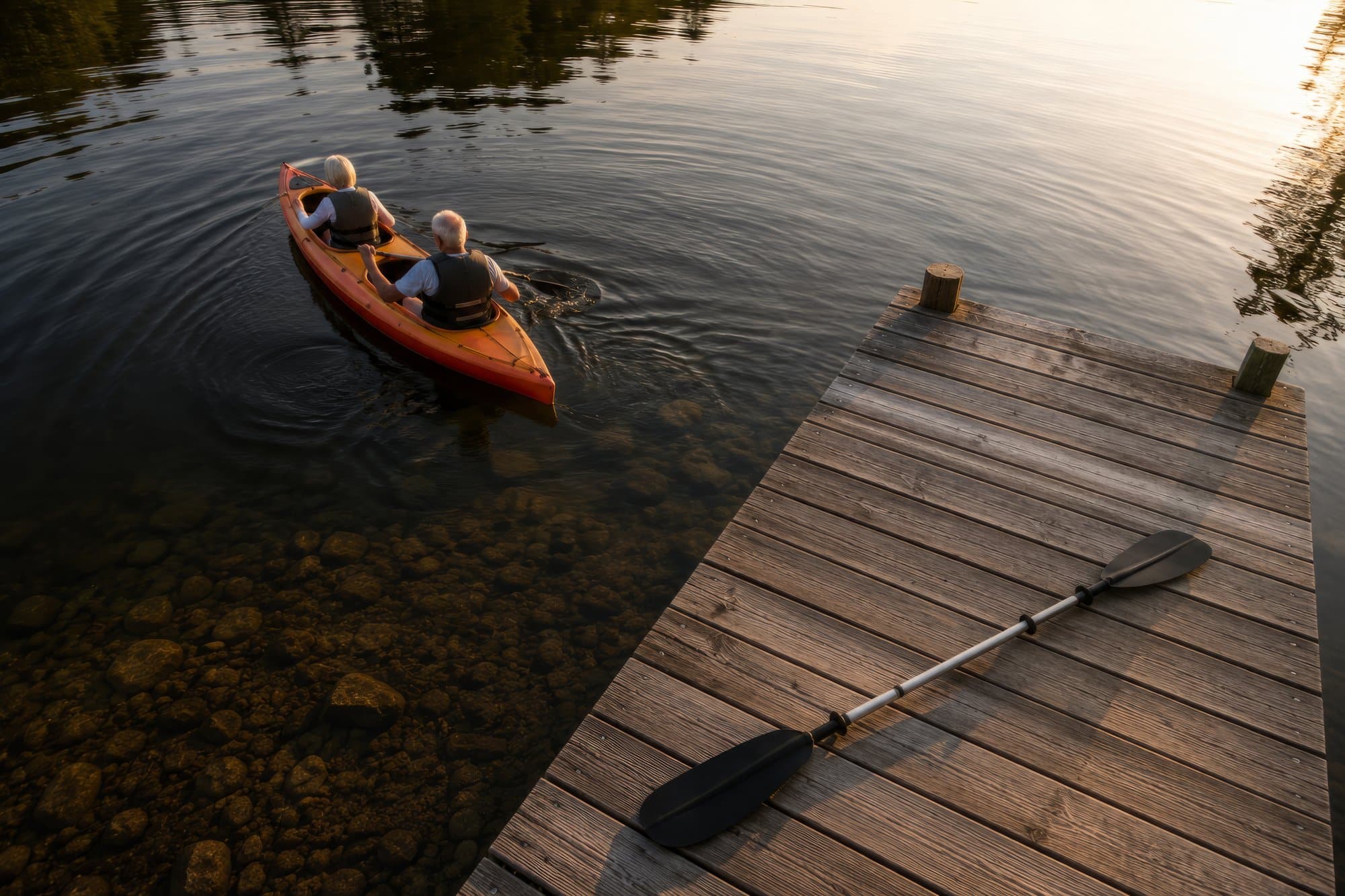
Early morning may be the best time to paddle from the cottage. The lake is often calmer, boat traffic has not yet begun, and the shoreline seems to wake slowly beneath the first light. A kayak or canoe waits beside the dock, promising access to quiet bays that cannot be appreciated from shore.
For a beginner, the distance between the dock and open water can feel like the hardest part of the trip. Kayaks move when stepped into. Canoes tip when weight shifts away from the centre. A high dock, slippery rock, or poorly secured boat can turn a peaceful launch into an awkward scramble.
Most difficult launches come from rushing. The paddler carries everything to the water at once, forgets to secure the boat, and tries to step down while holding a paddle, water bottle, and phone. A better launch begins before anyone gets into the craft.
Choose calm conditions, wear a properly fitted personal flotation device, organize the equipment, and use an entry point suited to the shoreline. Keep your weight low and centred, with something stable available for support.
Once the process becomes familiar, launching stops feeling like an obstacle. It becomes the quiet beginning of every paddle.
Prepare Yourself Before Moving the Boat
Put on your personal flotation device before approaching the water. Do not leave it loose in the kayak or plan to put it on after launching. Adjust the straps so it fits securely while still allowing comfortable movement.
Dress for the water temperature as well as the air. Spring and autumn sunshine can feel warm while the lake remains dangerously cold. Choose footwear that protects your feet and provides traction on wet docks, rocks, or rough shorelines.
Check the weather and look beyond the cottage bay. Wind often increases later in the day and may be stronger on open water than it appears from shore. Beginners should start in calm conditions and remain close enough to return before fatigue or changing weather becomes a problem.
Tell someone where you are going and when you expect to return. Carry a whistle or other required sound-signalling device, a communication method protected from water, and any safety equipment required for the craft and trip. Transport Canada requirements can vary with the type and length of the watercraft, so confirm what applies before launching.
Prepare the Kayak or Canoe on Shore
Inspect the hull, seat, handles, lines, and any fitted equipment before moving the craft. Make sure drain plugs are installed where applicable and that no damage or loose part will interfere with the trip.
Load only what you need. Place heavier items low and near the middle to preserve balance. Secure loose gear so it does not roll around or disappear if the craft overturns. Phones, keys, and other valuables belong in properly closed waterproof storage.
Adjust the kayak footrests while the boat is stable on land. Your knees should remain slightly bent rather than locked straight. In a canoe, decide where each paddler will sit and distribute equipment so the craft does not ride heavily at one end.
Carry the paddle separately or place it where it can be reached without bending far to one side. Many first-time launches become unstable because the paddler gets seated safely, then leans too far across the craft to retrieve equipment.
Choose the Best Launch Point
The easiest launch point has calm, shallow water, stable footing, and enough clearance for the hull and paddle. Avoid steep banks, loose stones, thick weeds, strong current, boat traffic, and areas exposed to large waves.
A gently sloping sand or gravel shoreline often works well for beginners. Entering from shore keeps the craft close to the bottom and usually reduces the height difference between the paddler and seat. Take care not to drag the hull across sharp rocks or abrasive surfaces.
A dock can provide stable footing, but a high dock may place the kayak or canoe far below the paddler. A low-profile floating section or purpose-built launch brings the craft closer and moves with changing water levels.
Position the paddling launch away from swimming ladders, fishing areas, boat slips, and personal watercraft. Nor Col’s guide to planning a family cottage waterfront explains how separate activity zones can reduce conflicts on a busy shoreline.
Launch a Kayak From the Shore
Place the kayak parallel to the shore in water deep enough to float without scraping the bottom. Keep the cockpit close enough to reach from stable footing. Point the bow toward the direction you intend to leave.
Secure the kayak with one hand or ask another person to hold it. Position yourself beside the cockpit, keep your weight low, and use the craft only at a reinforced area intended to support entry. Avoid placing full weight on a narrow edge or pulling on deck rigging that is not designed as a handle.
A common method is to sit on the edge of the dock, launch, or stable shoreline surface first, then place your feet into the cockpit and lower your body into the seat. From a shallow beach, you may straddle the kayak behind the cockpit, sit down while keeping your weight centred, and bring your legs inside.
Once seated, settle your feet on the footrests and confirm that the paddle and equipment are reachable. Use your hands or paddle carefully to move into deeper water without grinding the hull along the bottom.
Launch a Canoe With Patience and Teamwork
Canoes feel stable when weight remains low and close to the centreline. They become much less stable when someone stands upright, steps onto the side, or reaches across the gunwale.
Place the canoe parallel to shore or alongside a low dock. One person should hold it firmly while the first paddler enters. Step toward the centreline, keep your hands supported, and lower yourself into the seat without standing longer than necessary.
For two paddlers, the person holding the canoe remains in control until the first paddler is settled. The second person then enters using the same slow, centred movement. Communicate before every shift in weight so nobody is surprised.
Load bags before the paddlers enter when doing so can be completed without overreaching. Keep the load balanced between the bow and stern and secure loose equipment. Never attempt to board while carrying several items in both hands.
When leaving shore, push away gently and begin paddling only after both people are seated and ready. A calm, coordinated launch will always look less dramatic than a rushed one, which is exactly the point.
Launch From a Dock Without Fighting the Height
Position the kayak or canoe parallel to the dock and secure it so it cannot slide away. The gap should remain small enough for a controlled transfer but not so tight that waves trap fingers or damage the hull.
Sit on the dock before transferring your weight. Lower your feet into the craft, keep one hand on a stable part of the dock, and move your body directly over the seat. Avoid standing in the craft or trying to step down from an upright position.
For a canoe, having a second person stabilize the opposite end makes boarding much easier. Enter one at a time and stay close to the centreline. If the dock is high above the water, use a different launch point rather than forcing an uncomfortable transfer.
A floating kayak launch can centre the craft and provide handholds or paddle notches that make entry more predictable. It also maintains a more consistent height as water levels change.
Some paddlers need additional transfer support. Nor Col’s universally accessible kayak launch can incorporate benches, slide boards, guide rails, and other features to help people move into small watercraft more independently.
Start With a Short, Controlled Paddle
The first trip should build confidence rather than test endurance. Stay in sheltered water close to shore and practice basic forward strokes, stopping, turning, and backing up.
Learn how the craft responds when you look over one shoulder or reach toward the water. Keep your head over the middle and rotate through the torso rather than leaning far outside the boat. Sudden upper-body movement causes many beginner wobbles.
Practice approaching the dock or shore several times while you still have energy. Slow down early and arrive under control. A kayak or canoe carries momentum even after paddling stops, and wind may continue pushing it.
If you capsize, remain with the craft unless doing so creates a more immediate danger. A paddling course can teach proper self-rescue, assisted rescue, and re-entry techniques. Those skills are much easier to learn in controlled conditions than during an unexpected incident.
Return and Land With the Same Care
Beginners often concentrate on launching and forget that landing occurs after they are tired. Plan the return before leaving and keep the access point clear.
Approach slowly, preferably into the wind where practical, and keep the craft parallel to the dock or shoreline. Secure it before shifting your weight. Do not grab a distant object or stand suddenly to reach land.
At a dock, keep your body low, place both hands on a stable surface, and lift yourself onto the dock before removing your legs. At a gradual shore, stop before the hull grounds hard, then step out in shallow water while keeping your weight centred.
Unload equipment after the craft is stable. Drain water where appropriate, rinse off mud or debris, and store the boat away from waves and changing water levels. A kayak left loose beside the dock can become damaged or drift away during a storm.
Nor Col’s article on adding a kayak launch to an existing dock outlines placement, compatibility, and accessory considerations for cottage owners who paddle frequently.
Avoid the Most Common Beginner Mistakes
The first mistake is standing upright during entry. Kayaks and canoes are designed to support a seated paddler, and balance decreases quickly when body weight rises.
The second is entering with loose gear in both hands. Secure the boat, prepare the paddle, and load equipment before transferring your weight. Keep at least one hand available for support.
The third is launching into conditions beyond the paddler’s ability. Strong wind, cold water, heavy boat traffic, and poor visibility can turn a short trip into a difficult return.
The final mistake is assuming that a life jacket replaces judgment. Proper flotation is essential, but it works alongside weather awareness, swimming ability, supervision, training, and a realistic route.
Frequently Asked Questions
Is it easier to launch a kayak from shore or from a dock?
A gradual shoreline is often easiest for beginners because the kayak remains close to the paddler and the water is shallow. A low dock or dedicated launch can be equally convenient. High docks tend to make the transfer more difficult.
Should I get into a kayak feet first?
From a dock or low platform, sitting first and then placing the feet into the cockpit usually keeps the body low and controlled. The exact method depends on the kayak design and launch site. Avoid standing in the kayak or stepping down from full height.
Who gets into a tandem canoe first?
The best sequence depends on the launch position and which person can stabilize the canoe. One paddler should hold the craft securely while the other enters and sits. The second person boards only after the first is settled and ready.
Do I need a life jacket for a short paddle near the cottage?
Wear a properly fitted personal flotation device whenever paddling, even close to shore. Conditions and balance can change unexpectedly. Confirm all required safety equipment under current Transport Canada rules before launching.
Can I launch a kayak beside the boat slip?
It is better to use a separate area. Boats create propeller, line, fuel, wake, and visibility hazards. A calm launch point away from powered watercraft gives beginners more time and room to manoeuvre.
What makes a dedicated kayak launch easier to use?
A good launch brings the paddler closer to the water, keeps the craft centred, and provides stable handholds or guides. Floating designs also rise and fall with the lake, maintaining a more consistent transfer as water levels change.
Let the Adventure Begin Quietly
Launching a kayak or canoe should not require strength, speed, or perfect balance. It requires preparation and a few deliberate movements. Secure the craft, keep your weight low, and take the process one step at a time.
Soon, the mechanics become familiar. The awkward first launch gives way to mornings spent exploring the shoreline, watching wildlife, and reaching quiet places that cannot be seen from the cottage.
That is the real reward. The launch is only the doorway. The lake is waiting beyond it.
Nor Col Dock Solutions (formerly Nor Col EZ Dock) serves Central Canada, including Kenora, SK (Saskatchewan), Manitoba, and Northwest Ontario, to strengthen local visibility. Contact our team today on our contact page or follow us on Facebook to start planning your perfect waterfront.