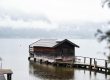
Every family imagines cottage life a little differently. For some, it is quiet mornings with a fishing rod and a cup of coffee before the rest of the house wakes up. For others, it is children jumping off the dock, afternoons pulling tubes behind the boat, or evenings gathered around a fire after one last swim before sunset. Whatever those traditions may be, they all have one thing in common: they begin at the waterfront.
The shoreline is often the most valuable part of any cottage property, not simply because it provides access to the lake, but because it becomes the place where families naturally gather. It connects the cottage to the water and serves as the backdrop for many of the memories that will be talked about for years to come. A thoughtfully planned waterfront makes those moments easier to enjoy, while a poorly organized one can unintentionally create frustration, congestion, and unnecessary maintenance.
Many cottage owners focus first on the dock itself, but the most enjoyable waterfronts are designed as complete outdoor living spaces. They consider how people move between the cottage and the lake, where boats are launched, where children swim safely, and where family members naturally spend time together. The goal is not to build the biggest waterfront possible. It is to create one that works beautifully for the people who use it.
Over the years, we have found that the best waterfronts are rarely the most elaborate. Instead, they reflect thoughtful planning, practical design, and a deep appreciation for the Canadian lake lifestyle. When every feature has a purpose and the layout supports the way your family actually enjoys the water, the entire property feels more welcoming from the moment you arrive.
Start With Your Family, Not Your Dock
Before selecting dock sections, boat lifts, or waterfront accessories, take time to think about the people who will use the property most often. A waterfront designed for retired couples may look very different from one built for young children, teenagers, or multiple generations gathering throughout the summer.
Consider how a typical weekend unfolds. Where do children naturally enter the water? How often are boats launched? Does someone enjoy fishing every morning? Is there enough room for grandparents to comfortably sit near the water while watching grandchildren swim? Answering these questions often reveals opportunities that are not immediately obvious when looking only at the shoreline itself.
Many cottage owners discover that designing around family routines leads to a much more practical waterfront than simply choosing the largest dock that fits the property. The best layouts support everyday activities without requiring everyone to compete for the same space.
As families grow and change, these early planning decisions continue paying dividends. A waterfront built around people rather than products adapts more naturally to new interests, additional boats, or future generations discovering the joy of life at the lake.
Think of the Waterfront as an Outdoor Living Space
The most inviting Manitoba cottage properties blur the line between the cottage and the lake. Rather than treating the dock as a separate structure, successful waterfronts connect every part of the property into one seamless outdoor experience.
Walking from the cottage to the shoreline should feel natural and comfortable. Paths should be easy to navigate, equipment should have designated storage areas, and gathering spaces should encourage conversation without blocking access to the water. Even simple additions, such as a sitting area overlooking the lake or a shaded space near the dock, help transform the waterfront into an extension of the home.
When people feel comfortable lingering by the water, they naturally spend more time outdoors. Morning coffee becomes a lakeside tradition, afternoon conversations last longer, and children remain within view while enjoying the shoreline. These simple experiences often become the moments families remember long after the summer has ended.
Planning the waterfront as an outdoor living space also helps future improvements fit together more naturally. Whether adding a new dock section, expanding boat access, or creating additional recreation areas, every improvement contributes to a cohesive overall design.
Create Safe Spaces for Every Activity
A busy family waterfront may support several activities at once. Someone is preparing the boat for an afternoon cruise, children are swimming near shore, another family member is fishing from the dock, and guests are launching kayaks for an evening paddle.
Without thoughtful planning, these activities can quickly compete for the same space. A well-designed waterfront avoids that problem by giving each activity its own comfortable area. Boats should have convenient boarding locations without interfering with swimmers. Fishing areas benefit from quieter sections of the dock where casting remains unobstructed. Kayaks and canoes are easiest to launch when dedicated access points reduce congestion around larger watercraft.
This separation is not simply about convenience. It also improves safety by reducing unnecessary interactions between moving boats, swimmers, and people carrying equipment along the dock.
When each activity has room to breathe, the entire waterfront feels calmer, more organized, and considerably more enjoyable.
Plan for the Future, Even if You Do Not Build It Today
One of the biggest differences between a good waterfront and a great one is that great waterfronts are designed with tomorrow in mind. Even if your immediate plans are modest, it is worth considering how your family’s needs may change over the next ten or twenty years.
Young children eventually become teenagers who want paddleboards, kayaks, and fishing boats. Adult children begin bringing their own families to the cottage. A single fishing boat may one day be joined by a pontoon or a personal watercraft. These changes happen gradually, but they often outgrow a waterfront that was designed only for today’s needs.
Planning ahead does not mean building everything at once. It simply means leaving room for future improvements. A modular floating dock system is especially well suited for this approach because additional sections, kayak launches, canoe launches, boat lifts, or PWC ports can often be incorporated without redesigning the entire waterfront.
Many cottage owners tell us they appreciate having a long-term vision, even if those improvements are completed over several seasons. Building with flexibility in mind allows each addition to complement the original design instead of feeling like an afterthought.
Work With Nature Instead of Against It
Some of the most beautiful waterfronts in Manitoba appear as though they have always belonged there. They complement the shoreline rather than competing with it, preserving mature trees, natural vegetation, and the unique character of the lake.
Every shoreline has its own personality. Some feature gradual sandy beaches that are ideal for swimming, while others have rocky shorelines that provide excellent fishing and boating access. Rather than trying to force every property into the same layout, successful waterfront planning embraces these natural characteristics.
Preserving native vegetation wherever possible not only enhances the appearance of the property but also helps reduce erosion and supports healthy aquatic ecosystems. Working with existing contours often minimizes construction while creating a waterfront that feels authentic to its surroundings.
Over the years, we’ve learned that the waterfronts families enjoy the most are those that feel connected to the lake rather than imposed upon it. Thoughtful planning respects both the needs of the family and the beauty of the landscape that drew them there in the first place.
Keep Maintenance Simple
Every improvement to a waterfront should enhance cottage life, not create another list of weekend chores. While it is easy to become excited about new features, it is equally important to consider how much maintenance they will require over the coming years.
Choosing durable materials, planning for seasonal water level changes, and designing for easy access during inspections all contribute to a waterfront that remains enjoyable rather than demanding. Storage areas should be convenient to reach, walking paths should remain clear, and equipment should be positioned where routine maintenance can be completed safely and efficiently.
This philosophy extends to the dock itself. A thoughtfully designed modular floating dock system can often simplify seasonal maintenance while providing flexibility as the property evolves. Instead of committing to a layout that becomes increasingly difficult to maintain, many cottage owners appreciate solutions that continue working with them year after year.
The goal is simple: spend less time maintaining the waterfront and more time making memories on it.
Every Detail Should Invite People to Stay Longer
Think about your favorite waterfronts. Chances are they are not memorable because they were the largest or most expensive. They are memorable because they felt welcoming.
Perhaps there was a comfortable place to sit while watching children swim. Maybe there was enough room for several people to fish together without feeling crowded. The pathway from the cottage to the dock was easy to navigate, and the entire waterfront seemed to encourage people to slow down and enjoy the surroundings.
Those details rarely happen by accident. They are the result of thoughtful planning that places people at the center of every decision. Comfortable seating, organized storage, clear walkways, designated activity areas, and unobstructed lake views all work together to create a space where family and friends naturally want to spend their time.
The most successful waterfronts become outdoor living rooms. They invite conversations that last long after sunset, quiet mornings with a cup of coffee, and countless family traditions that are passed from one generation to the next.
Frequently Asked Questions
What should I consider first when planning a family-friendly waterfront?
Start by thinking about how your family actually spends time at the lake rather than focusing immediately on dock dimensions or products. Consider who uses the waterfront, what activities happen most often, and how people move between the cottage and the shoreline. Planning around daily routines usually results in a more enjoyable and efficient layout than simply installing the largest dock possible. A waterfront that reflects your family’s lifestyle will continue serving you well for many years.
How can I make my waterfront safer for children?
Safety begins with thoughtful design. Creating dedicated areas for swimming, boating, fishing, and paddling helps reduce congestion and keeps different activities from overlapping. Clear walkways, organized storage, secure ladders, and easy access in and out of the water all contribute to a safer environment. Good visibility from the cottage to the shoreline also allows parents and grandparents to comfortably supervise children while still enjoying the waterfront themselves.
Is it better to build everything at once or expand over time?
Many cottage owners find that building in phases is both practical and cost-effective. Establishing a flexible foundation allows the waterfront to grow alongside your family’s needs. As interests change, additional dock sections, boat lifts, kayak launches, canoe launches, or PWC ports can often be incorporated without redesigning the entire waterfront. Taking a long-term approach allows each improvement to feel intentional while spreading the investment over several seasons.
How do I balance recreation with protecting the shoreline?
One of the best ways is to work with the natural landscape instead of dramatically changing it. Preserving native vegetation, minimizing unnecessary shoreline disturbance, and choosing dock layouts that respect existing conditions all help protect water quality while maintaining the natural beauty of the property. A thoughtfully designed waterfront provides excellent recreation opportunities without sacrificing the health of the lake for future generations.
Can a smaller waterfront still accommodate multiple activities?
Absolutely. Size is only one part of successful waterfront planning. Organization often has a much greater impact than square footage alone. By creating clearly defined areas for boating, swimming, fishing, relaxing, and equipment storage, even a modest waterfront can comfortably support a wide variety of activities. Good planning allows every square foot to work harder while keeping the entire space open, functional, and welcoming.
A Waterfront Designed Around Family
The most treasured cottage memories are rarely about the dock itself. They are about the moments that happen because the waterfront brings people together. It is where children learn to swim with confidence, where grandparents tell stories while watching the sunset, where early morning fishing trips become family traditions, and where another unforgettable summer quietly unfolds one day at a time.
Planning a family-friendly waterfront means thinking beyond construction. It means creating a place that welcomes every generation, supports a variety of activities, and encourages everyone to spend more time outdoors. When every feature serves a purpose and the entire shoreline works together as one cohesive space, the waterfront becomes one of the most valuable parts of the property—not because of what it costs, but because of what it makes possible.
As your family grows, your waterfront should be able to grow with it. Flexible dock systems, thoughtful planning, and a long-term vision allow today’s improvements to support tomorrow’s adventures, whether that means welcoming grandchildren, adding new watercraft, or simply creating more opportunities to gather by the lake.
About Nor Col Dock Solutions
At Nor Col Dock Solutions, we understand that every family’s vision of cottage life is unique. Our goal is to help cottage owners throughout Manitoba, Saskatchewan, Northwest Ontario, Kenora, and the surrounding lakes create waterfronts that are practical, adaptable, and built around the experiences that matter most. With thoughtful planning and quality solutions, your waterfront can continue serving your family for decades while preserving everything that makes Canadian cottage living so special.
Nor Col Dock Solutions (formerly Nor Col EZ Dock) services Central Canada, Kenora, SK (Saskatchewan), Manitoba, and Northwest Ontario to strengthen local visibility. Contact our team today on our contact page (https://norcoldocks.com/contact) or follow us on Facebook (https://www.facebook.com/NorColDockSolutions) to start planning your perfect waterfront.