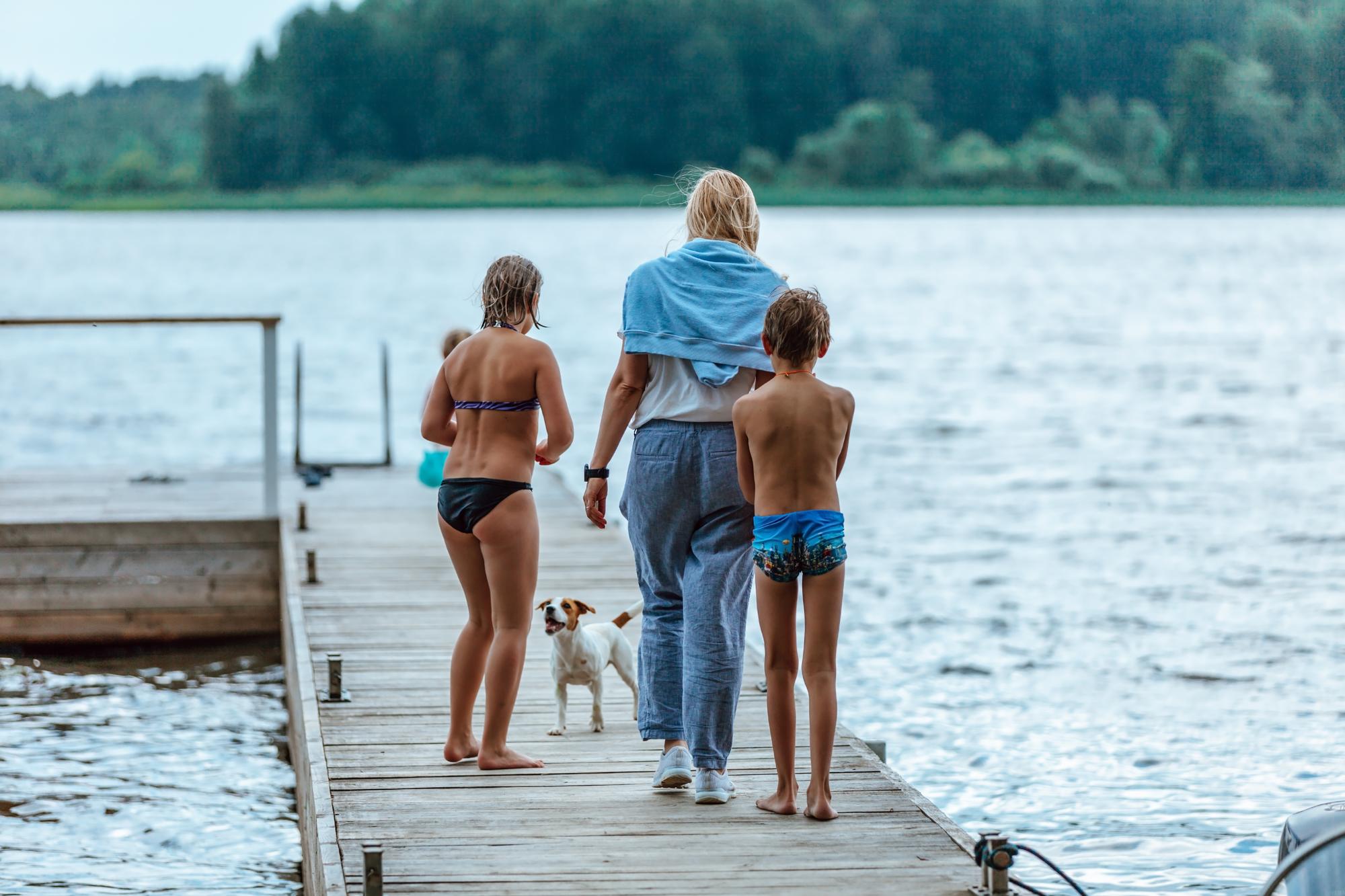
By ten o’clock, the cottage has spilled down to the lake. Someone is looking for the sunscreen, a grandparent has claimed the shady chair, and two children want to know whether the canoe is ready. A boat is arriving with cousins while the dog follows every person carrying a snack. It is the kind of happy activity that makes a summer weekend feel full.
It also reveals how well the waterfront works. A narrow route becomes crowded when swimmers and boat passengers meet. Loose paddles turn into things to step over. The person carrying lunch needs somewhere to set it down, and the youngest visitor cannot quite manage the last step onto the dock. Small inconveniences collect quickly when several generations share the same space.
A family-friendly waterfront makes those ordinary moments easier to manage. It offers clear routes, sensible places for different activities, and enough flexibility for the way your household actually spends time outside. At a cottage in the Whiteshell, near Kenora, or on a Manitoba lake, that may mean a better shore landing rather than a larger dock. The best starting point is a typical busy Saturday. Picture who is there, what they want to do, and where their paths cross. A little thought before the season can make more room for the good parts of being together.
Design around people as well as equipment
Start by considering the youngest and oldest people who regularly visit. Think about someone carrying a baby, a guest with limited balance, and the person moving a cooler toward the boat. A route that works for a fit adult with empty hands may be awkward for everyone else. Watch where people pause, reach for support, or ask for help.
A well-chosen gangway can improve the transition between shore and dock. Its usefulness depends on the landing, width, surface, angle, and changing water levels. Look beyond the product to the path leading to it. Roots, loose gravel, poor lighting, and a steep approach can undo the benefit of an easier final crossing.
Give swimming and boat arrivals separate routines
A busy waterfront becomes easier to understand when swimmers and boats use distinct areas. Position the usual swimming entry away from the berth and the approach route, where the site permits. Keep people out of the water during boat manoeuvres, and make sure visiting operators know the arrangement. A drawn line on a plan only works when the household follows it.
A ladder with useful handholds gives swimmers a planned way to leave the water. Nor Col’s dock accessories can help you explore that detail along with bumpers and other fittings. Assess the lakebed, depth, and surrounding activity before choosing the swimming spot. Avoid treating any dock edge as a diving area simply because it appears deep.
Make supervision part of the gathering
A good layout can support supervision by keeping sightlines open and the swimming area easy to observe. It cannot provide the attention a child needs. Agree on a specific responsible adult when children are near or in the water, and make a clear handoff when that person changes. General statements such as “everyone is watching” leave too much room for misunderstanding.
Wear properly fitted, Canadian-approved lifejackets or appropriate PFDs for the activity, with adults setting the example. Transport Canada’s lifejacket guidance can help families choose suitable equipment. Keep flotation gear accessible and check fit as children grow. A comfortable cottage routine begins with these habits before the excitement of getting onto the water takes over.
Give paddlers a place to take their time
Climbing into a kayak can be awkward when the boat keeps moving and everyone else is waiting to pass. A separate launch area lets paddlers arrange their gear and settle themselves without blocking the main walkway. It also makes returning easier when arms are tired and the breeze has picked up. The value is often in the calmer sequence rather than in launching faster.
A purpose-built kayak and canoe launch is worth considering where it suits the craft and site. For people with different mobility needs, explore an accessible kayak launch and assess the whole route to it. Check compatibility and the assistance each user may need. Equipment should support a realistic plan for the actual people using it.
Keep the useful things close and the walkway clear
The busiest cottage weekends generate a surprising amount of waterfront clutter. Towels, sandals, fishing rods, and water toys all need somewhere to go between uses. Give wet gear a defined spot on shore where it will not obstruct access. Keep sharp tackle and loose ropes away from the areas where children play or bare feet pass.
Choose storage with weather and supervision in mind. A place for lifejackets should make them easy to find, while cleaning products and tools should remain out of children’s reach. Return equipment to its place after an outing instead of waiting until the end of the weekend. That small habit keeps the waterfront ready for the next person and reduces the repeated search for missing paddles.
Create room for quieter ways to enjoy the lake
Not everyone wants to swim or operate a boat. A comfortable seat with a clear view can make the waterfront welcoming for a grandparent, a reader, or someone recovering from an injury. Put seating where it does not narrow the walking route or conceal children from view. A stable area on shore may offer more useful space than chairs crowded onto the dock.
If the dock genuinely needs more room, explore suitable modular configurations with the site’s capacity and anchoring in mind. Plan for how many people gather and what equipment occupies the space. Leave a route for someone to walk through without asking everyone else to move. Comfortable family use comes from how the pieces relate, not simply from adding more deck.
Frequently asked questions
Do we need a bigger dock for family weekends?
Sometimes, but first identify where the congestion starts. Better shore storage, a separate launch routine, or moving chairs may solve the problem. If expansion is needed, assess loading, anchoring, and available waterfront space before adding sections.
Can dock railings replace close supervision?
No physical feature should be treated as a substitute for supervising children around water. Railings may provide support in an appropriate location, but openings and water access remain part of the setting. Use a clear supervision routine and suitable flotation equipment.
How can we make the waterfront easier for grandparents?
Ask which parts of the route they find difficult rather than guessing. A stable path, suitable handholds, an easier gangway angle, and a place to rest may help. For significant mobility needs, have the complete access route assessed before buying individual features.
Where should we put water toys and fishing gear?
Use defined storage away from the main route and the swimming entry. Separate sharp fishing tackle from family play equipment. Keep frequently used items easy to reach so tidying does not become a chore nobody wants to do.
Make space for the memories
A thoughtful family waterfront gives people room to enjoy the lake in their own ways. One person can read while another paddles, and the next boat arrival need not interrupt every activity on shore. That is the real reward of planning: fewer tangled moments and more time for the summer weekends everyone remembers.
Nor Col Dock Solutions (formerly Nor Col EZ Dock) serves Central Canada, including Kenora, SK (Saskatchewan), Manitoba, and Northwest Ontario, to strengthen local visibility. Contact our team today on our contact page or follow us on Facebook to start planning your perfect waterfront.