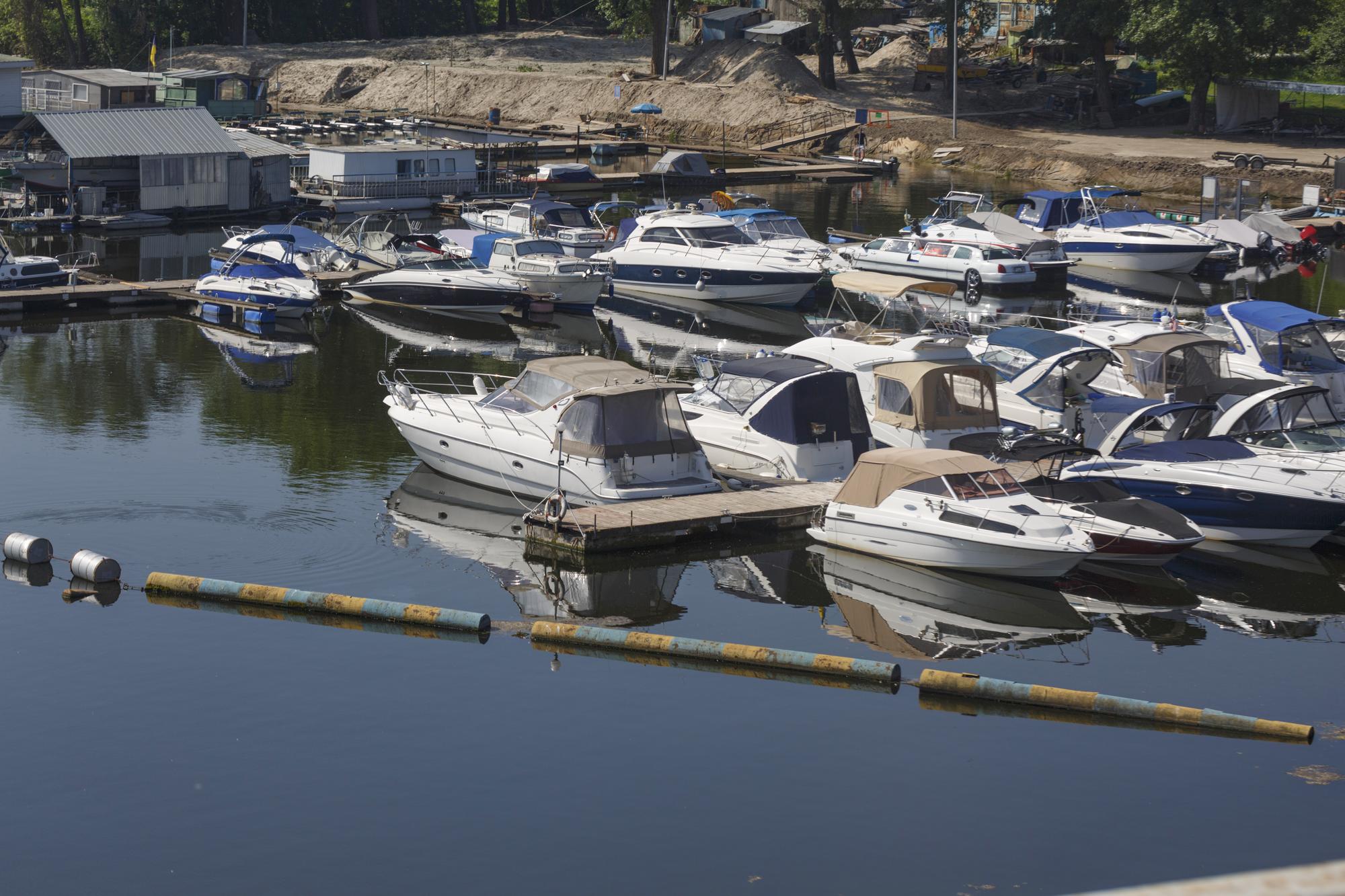
The first visiting boat arrives just as someone is getting ready to leave. A cousin waves from the passenger seat, the family fishing boat occupies the usual berth, and a personal watercraft sits where the canoe normally launches. Everyone is pleased to see one another. Nobody is quite sure where the next boat should go.
Peak summer weekends turn a private cottage waterfront into a small meeting place. Friends come by water, family members want different outings, and the shore collects more equipment than it holds on an ordinary Tuesday. The challenge is rarely just the number of boats. It is the way arrivals, boarding, storage, and swimming overlap in the same limited space.
Better boat parking begins with sorting those uses out. At a cottage near Kenora or on a Manitoba lake, the answer may be a clearer guest berth and a better approach. On another property, moving a PWC to its own port might free the spot that causes every conflict. Sometimes the right decision is simply to limit how many visiting boats the waterfront can accommodate. A workable plan should make docking less hurried and the waterfront easier to share. It should also suit changing water levels, local exposure, and the boats you actually use, rather than the ones pictured in an idealised summer scene.
Find the problem before expanding the dock
Watch a typical busy arrival from beginning to end. Notice where the operator approaches, where passengers step off, and which lines obstruct the route. Ask whether boats are occupying useful berths while nobody is using them. Identify the point where another watercraft or a group of people makes the process awkward.
Sketch the boats to approximate scale beside the dock. Include their beams, overall lengths, and space needed to manoeuvre rather than drawing them as narrow rectangles. Nor Col’s dock configurations can help you compare possible arrangements. A layout that creates another berth on paper still needs assessment for anchoring, loading, exposure, and actual approach space.
Plan the approach as carefully as the parking spot
A berth is only useful when a boat can reach and leave it in conditions the owner can manage. Consider common wind direction, shallow areas, nearby equipment, and the space required to turn. Keep swimmers and paddlers clear during manoeuvres. An inviting gap between two boats may be difficult to enter when a crosswind pushes the bow sideways.
Observe conditions at different points in the season. Water that was adequate for a lightly loaded boat in spring may not provide enough clearance later. Match the arrangement to the loaded boat and any storage equipment involved. Extending the dock does not solve a shallow approach route elsewhere in the bay.
Match storage to the craft that uses it
Different boats make different demands on the waterfront. A fishing boat, pontoon, kayak, and PWC should not be assigned places simply because each can fit beside an edge. Consider how people board, where gear goes, and how each craft is secured. The family’s main boat may deserve the easiest routine, with guest space planned around it.
A compatible drive-on boat port or lift may change how a suitable boat occupies the dock. Discuss hull shape, total loaded weight, operating depth, and manufacturer limits before choosing. Include the space needed to access covers or carry out ordinary care. Storage that frees one edge but blocks the walkway can exchange one inconvenience for another.
Give smaller watercraft their own place
Small craft can consume a surprising amount of useful frontage. A PWC left at the family boat’s boarding point creates repeated rearranging, while a canoe across the walkway slows everyone down. Assign each craft a place based on how it launches and returns. Keep those routines separate from the busiest boat berth where possible.
For suitable equipment, PWC ports and a dedicated kayak launch offer options to discuss. Confirm compatibility and clearance rather than choosing solely by available deck space. Allow paddlers time to settle into their craft without a visiting boat arriving beside them. Clear roles for small areas can make the whole waterfront feel less crowded.
Make the guest berth easy to understand
Visitors should know where to approach before they are close enough to need shouted directions. Share a simple description or photograph of the intended berth, including any hazards they should avoid. Tell them if the waterfront cannot accommodate their boat or if another arrival time would be easier. Setting expectations early is friendlier than improvising in a crowded bay.
Prepare suitable lines, attachment points, and boat-protection accessories for the intended use. Check the visiting boat’s size and needs rather than assuming the family setup works for everyone. Avoid casually tying boats together when the dock and mooring arrangement have not been assessed for that use. Passenger access and changing conditions still need a sensible plan.
Leave capacity for people and changing conditions
Every available edge does not have to become a berth. Leave room for boarding, carrying supplies, reaching ladders, and handling lines. Consider the number of people on the dock as well as the equipment attached to it. Busy weekends can produce a combined load quite different from an ordinary visit.
Before expanding, review the anchoring arrangement and the capacity of the full system with a qualified installer. Check the permissions relevant to the proposed work and location. If the site has reached its practical limit, stagger visits or use an appropriate alternative landing arrangement. A waterfront that accommodates fewer boats comfortably is more useful than one where every arrival becomes a difficult negotiation.
Frequently asked questions
What is the easiest way to add guest boat space?
Begin by freeing any berth occupied by equipment that could be stored elsewhere. Then assess the guest boat’s approach, dimensions, and mooring needs. An additional section may help, but only after the full layout and installation have been reviewed.
Can I park two boats beside the same dock section?
Possibly, depending on dimensions, loading, attachment points, and exposure. It should not be decided from the amount of visible space alone. Have the arrangement assessed, including passenger access and the loads both boats may apply.
Will a PWC port make the dock less crowded?
It can when a suitable PWC currently occupies a useful boat berth. The port still needs its own space and compatible installation. Compare the complete layout before assuming the change creates more usable room.
Should visiting boats stay overnight?
Only when the berth, mooring arrangement, and expected conditions suit them. Overnight wind or changing levels may differ from the conditions during arrival. Agree on the plan with the operator and avoid treating a temporary stop as suitable long-term storage.
A calmer welcome by water
Good boat parking makes a summer visit feel easy from the moment friends arrive. Operators understand the approach, passengers have somewhere to step, and the next outing can begin without moving every craft at the cottage. That leaves the conversation where it belongs: on the dock, with people you are glad to see.
Nor Col Dock Solutions (formerly Nor Col EZ Dock) serves Central Canada, including Kenora, SK (Saskatchewan), Manitoba, and Northwest Ontario, to strengthen local visibility. Contact our team today on our contact page or follow us on Facebook to start planning your perfect waterfront.