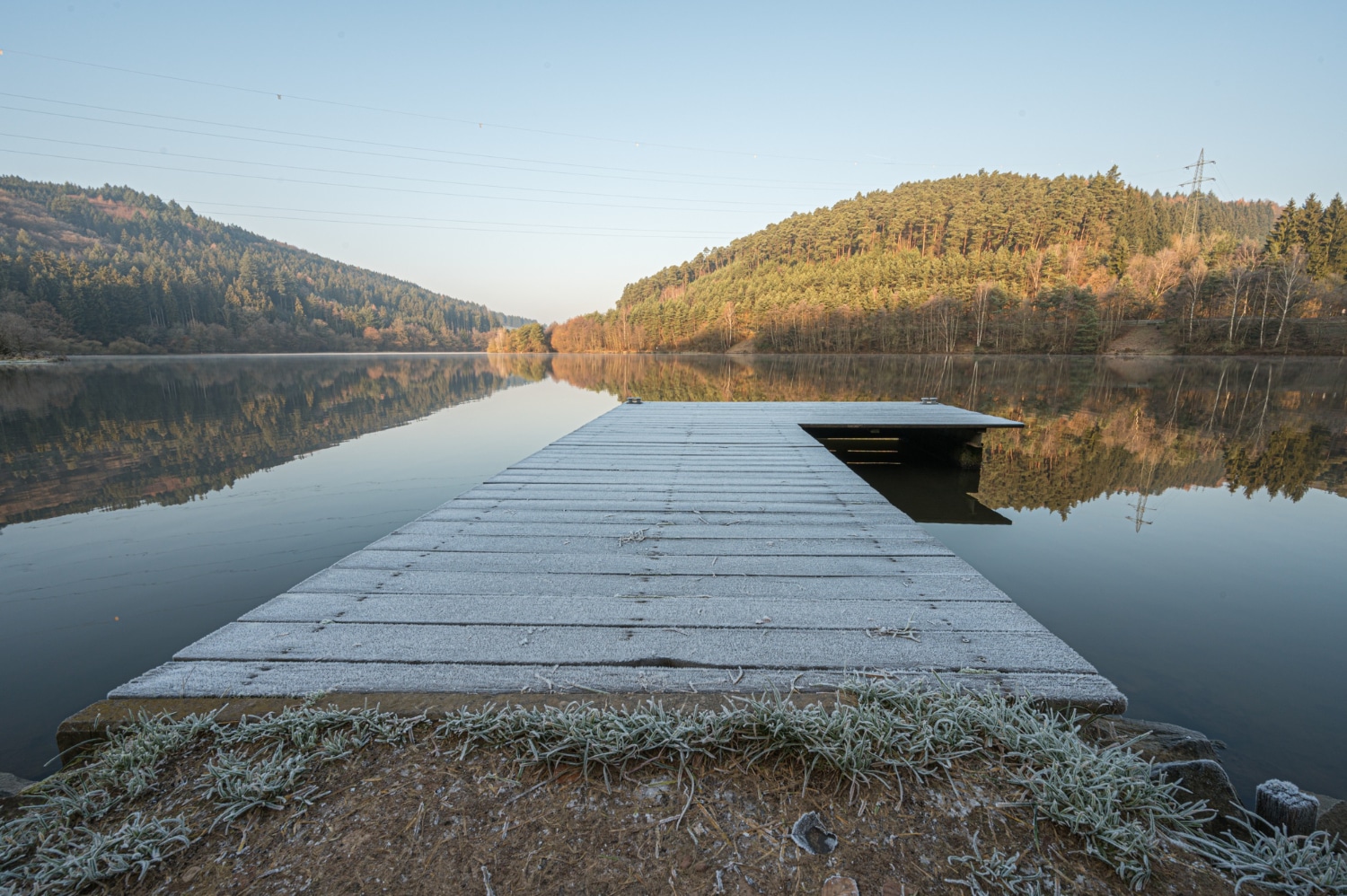
Shallow lakes create unique challenges for waterfront property owners across Manitoba, Saskatchewan, Kenora, and Northwest Ontario. A dock that works perfectly on a deep lake may become frustrating or even unusable in shallow water conditions.
Many lakefront property owners discover this problem after installation. Boats scrape the lakebed near the shoreline. Water levels fluctuate during summer. Weed growth becomes difficult to manage. Sections of the dock feel unstable or sit too close to the water.
The reality is that shallow waterfronts require a different approach to dock planning. Choosing the wrong dock system can lead to constant maintenance, difficult boat access, and expensive adjustments later.
Fortunately, several dock styles work extremely well in shallow Canadian lakes when designed properly. The key is understanding how water depth, lakebed conditions, shoreline slope, seasonal changes, and recreational use all affect long-term dock performance.
Whether your property sits near Lake Winnipeg, Whiteshell Provincial Park, Northern Manitoba, or a smaller recreational fishing lake, choosing the right dock system helps create a safer, more functional waterfront experience.
Why Shallow Lakes Create Dock Challenges
Shallow water changes how a dock behaves throughout the season.
Unlike deeper lakes, shallow waterfronts often experience:
- Significant weed growth
- Softer lakebeds
- Mud accumulation
- Greater seasonal water fluctuation
- Limited boat clearance
- Stronger shoreline impact
- Ice pressure concerns during winter
These conditions affect both dock stability and usability.
A poorly designed dock may become difficult to access later in the season when water levels drop or vegetation thickens near the shoreline.
That is why shallow lake planning requires more flexibility than traditional deep-water dock systems.
Floating Docks Often Work Best in Shallow Water
For many shallow lakes in Manitoba and Saskatchewan, floating docks provide the most practical long-term solution.
Unlike stationary docks that rely heavily on fixed underwater supports, floating systems rise and fall naturally with changing water levels.
This flexibility offers several advantages:
- Better adaptation to fluctuating lake levels
- Reduced pressure on soft lakebeds
- Easier seasonal adjustments
- Less shoreline disruption
- Improved stability across uneven bottoms
Floating docks also work well in areas where traditional piling installation becomes difficult because of mud, rocks, or inconsistent lakebeds.
In many shallow waterfronts, this adaptability makes floating systems the most reliable option year after year.
Water Level Changes Matter More in Shallow Lakes
Many Central Canadian lakes experience noticeable water level changes during summer.
A dock installed during high spring water may sit awkwardly later in the season once water levels drop.
Shallow lakes magnify these changes because even small water fluctuations affect:
- Boat access
- Boarding height
- Dock stability
- Propeller clearance
- Swim access
Floating docks help reduce these problems because they maintain more consistent usability regardless of seasonal changes.
That flexibility becomes especially important on recreational lakes where conditions vary significantly from spring through late summer.
Stationary Docks Can Still Work in Some Conditions
Although floating systems work well for many shallow lakes, stationary docks still perform effectively in certain environments.
Properties with:
- Firm lakebeds
- Minimal water fluctuation
- Gradual shoreline slopes
- Limited ice movement
may still benefit from fixed dock systems.
Pipe docks are commonly used across Manitoba because they provide simple seasonal installation and removal. However, shallow muddy lakebeds sometimes make leveling difficult.
Stationary docks may also struggle when weed growth becomes excessive later in summer.
For these reasons, dock choice should always match the specific shoreline conditions rather than following a one-size-fits-all approach.
Lakebed Conditions Affect Dock Performance
The type of lakebed beneath the dock plays a major role in long-term stability.
Common shallow lakebed types include:
- Sand
- Mud
- Rock
- Clay
- Mixed sediment
Soft muddy bottoms often create problems for traditional supports because legs or pipes gradually sink over time.
Rocky lakebeds may complicate anchoring or leveling.
Floating systems generally handle changing lakebed conditions more effectively because they rely less on permanent underwater support points.
Understanding the lakebed early helps avoid expensive installation adjustments later.
Weed Growth Is a Major Factor
Shallow lakes often experience heavy aquatic vegetation growth during summer.
Without proper dock planning, weeds can:
- Block boat access
- Wrap around propellers
- Reduce swimming areas
- Increase maintenance
- Trap debris around the dock
Floating docks usually allow for easier repositioning or extension into deeper water when vegetation becomes problematic near shore.
Some waterfront property owners also design longer walkways to reach cleaner water farther from shore.
Planning around weed growth early creates a more enjoyable waterfront experience throughout the season.
Longer Walkways Often Improve Usability
On shallow waterfronts, the best boating water may sit farther from shore.
Many dock layouts therefore include:
- Longer walkways
- Extended floating sections
- Gradual transitions into deeper water
This helps improve:
- Boat clearance
- Swimming access
- Kayak launching
- Pontoon docking
Longer access pathways also help reduce shoreline wear by concentrating foot traffic onto designated surfaces instead of sensitive shoreline areas.
Boat Type Changes Dock Requirements
The type of watercraft used on the lake affects which dock system works best.
Fishing boats generally tolerate shallower conditions more easily than:
- Pontoons
- Wake boats
- Larger recreational boats
Pontoon owners often need:
- Deeper access points
- Wider maneuvering areas
- More stable boarding platforms
Kayaks, canoes, and paddleboards may function perfectly well with lower-profile shallow-water docks closer to shore.
Matching the dock system to the primary watercraft helps improve long-term functionality significantly.
Ice Conditions Must Be Considered
Manitoba and Saskatchewan winters place enormous pressure on waterfront infrastructure.
Shallow lakes sometimes experience more aggressive ice movement because ice sheets can contact lakebeds and push directly against structures.
Dock systems should account for:
- Ice expansion
- Freeze-thaw cycles
- Spring breakup
- Seasonal removal requirements
Floating docks often simplify winter management because many systems can be disconnected or repositioned more easily before freeze-up.
Ignoring winter conditions often shortens dock lifespan significantly.
Shoreline Protection Matters
Some dock installations unintentionally increase shoreline erosion.
Poorly planned access points may concentrate foot traffic or redirect wave energy toward vulnerable shoreline sections.
Floating docks generally create less shoreline disturbance because they:
- Move naturally with the water
- Require fewer permanent supports
- Reduce lakebed disruption
- Adapt to seasonal conditions
Maintaining natural vegetation around the shoreline also helps improve long-term stability.
Modular Dock Systems Offer Flexibility
Modular floating systems have become increasingly popular because they allow waterfront layouts to evolve over time.
Families often change how they use the lake over the years. A simple fishing dock may later need:
- PWC ports
- Kayak launches
- Seating areas
- Swim platforms
- Larger tie-up spaces
Modular systems allow additional sections to be added more easily without rebuilding the entire dock.
This flexibility works especially well for shallow lakes where conditions may change gradually over time.
Accessibility Improves Long-Term Enjoyment
A dock should feel easy to use for everyone.
Shallow water sometimes creates awkward boarding conditions if the dock sits too high or too low relative to boats and watercraft.
Stable floating systems often improve accessibility because they maintain more consistent boarding height despite changing water levels.
This becomes especially valuable for:
- Older adults
- Young children
- Guests
- Pets
- People carrying equipment
Smooth transitions and slip-resistant surfaces also improve safety around wet dock areas.
Dock Width Affects Functionality
Narrow docks often feel cramped quickly, especially when:
- Fishing gear accumulates
- Coolers get carried down
- Multiple people gather near boats
- Kayaks or paddleboards get stored nearby
Slightly wider dock sections improve:
- Traffic flow
- Safety
- Seating options
- Boarding stability
- Equipment organization
For active family waterfronts, wider layouts often provide much better long-term usability.
Think Beyond the First Season
Many dock decisions get made based only on current conditions.
However, shallow lakes change over time. Water levels fluctuate. Shorelines shift. Recreational needs evolve. Families grow.
The best dock systems remain adaptable enough to handle those changes without constant rebuilding.
Flexible floating layouts often provide the strongest long-term value because they adjust more naturally to evolving lake conditions.
Maintenance Should Stay Simple
Complicated dock systems become frustrating quickly.
Shallow lakes already require enough maintenance because of:
- Weeds
- Mud buildup
- Seasonal water changes
- Winter removal
Choosing a dock system that simplifies maintenance helps maximize time spent actually enjoying the lake.
Low-maintenance floating systems often reduce long-term headaches while improving overall waterfront usability.
Every Shallow Waterfront Is Different
There is no universal dock solution for every shallow lake in Manitoba or Northwest Ontario.
The best system depends on:
- Water depth
- Shoreline slope
- Boat type
- Recreational use
- Ice conditions
- Vegetation
- Lakebed composition
What works well on one property may perform poorly on another.
Careful planning helps ensure the dock supports both current and future waterfront needs.
A Better Dock Creates a Better Lake Experience
The right dock system should make waterfront living easier, safer, and more enjoyable.
On shallow lakes, flexibility and adaptability often matter more than sheer size or appearance. A dock that handles changing conditions smoothly helps reduce frustration while improving daily lake use.
Whether your property sits near Whiteshell Provincial Park, Lake Winnipeg, Northern Saskatchewan, or Northwest Ontario cottage country, choosing the right shallow-water dock system can dramatically improve how the waterfront functions year after year.
Nor Col Dock Solutions (formerly Nor Col EZ Dock) serves Central Canada, including Kenora, SK (Saskatchewan), Manitoba, and Northwest Ontario, with floating dock systems and customized waterfront solutions designed specifically for Canadian lake conditions. To learn more about dock systems for shallow lakes and changing waterfront conditions, visit Nor Col Dock Solutions’ Contact Page or follow Nor Col Dock Solutions on Facebook.