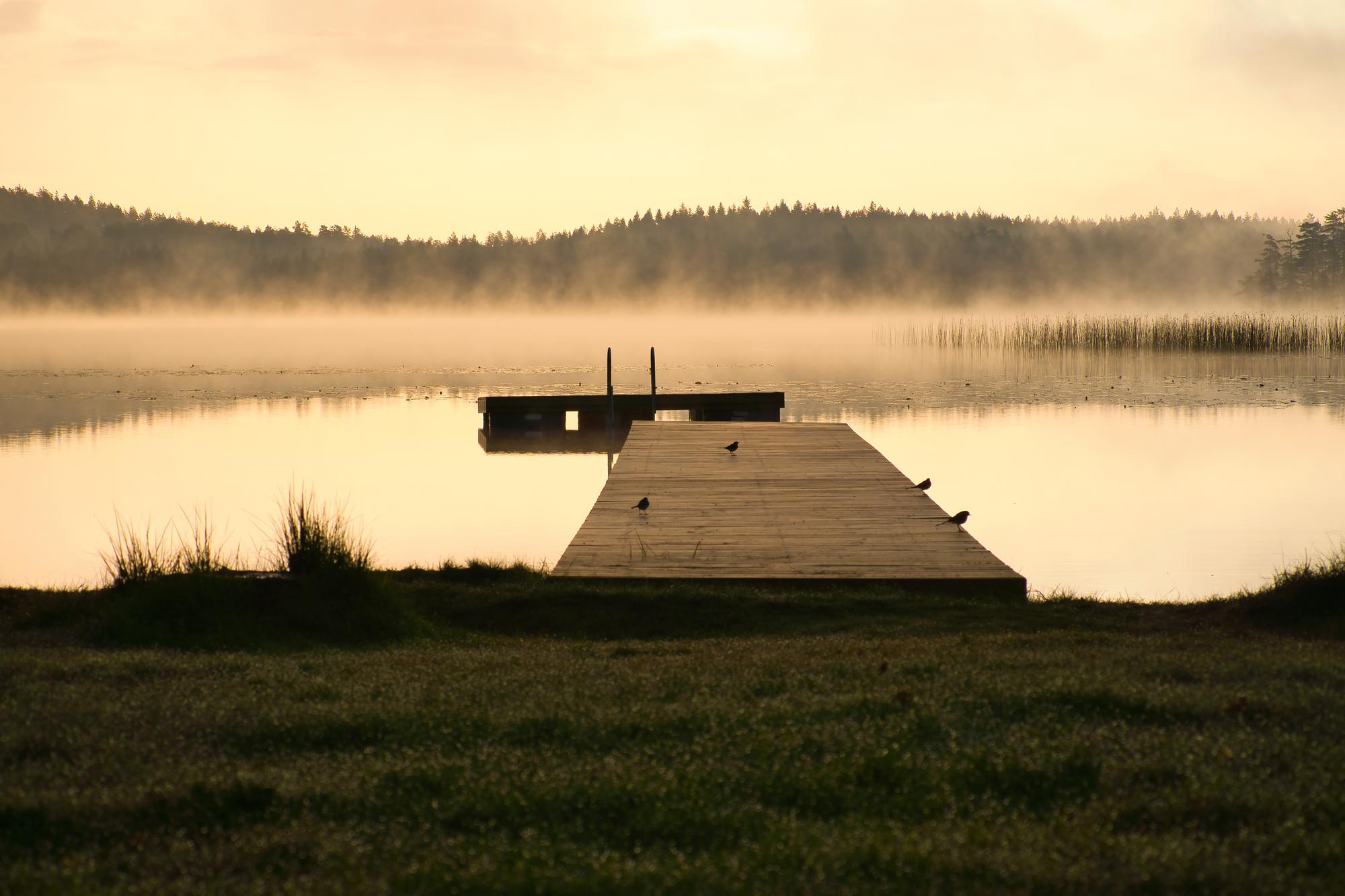
The coffee is still warm when the lake begins to change. An hour ago, the bay lay almost flat beneath the morning light. Now a breeze moves through the birches, small waves tap the shore, and the boat shifts against its lines. Nothing dramatic has happened. Yet the waterfront is already working differently from the way it did at breakfast.
That change is part of cottage life across Central Canada. A sheltered corner near Kenora can feel peaceful while the next stretch of Lake of the Woods catches a steady wind. A Manitoba shoreline may offer easy boating in spring, then need a different approach as water levels change. On an open Saskatchewan lake, the distance that wind travels across the water can matter as much as the weather forecast itself.
A useful waterfront plan begins with these ordinary changes. It considers where people walk, where boats sit, and how equipment responds when the lake gets restless. The goal is a place that feels comfortable on good days and remains manageable when conditions shift. Before choosing a dock shape or deciding how far to extend from shore, spend some time learning what your particular stretch of water asks of you. Those observations often explain why a neighbour’s successful setup would be a poor fit a few cottages away.
Read the shoreline before drawing the layout
Start with the view from your own property rather than a catalogue photograph. Notice where waves reach the bank, which areas stay wet, and whether nearby trees suggest an exposed or sheltered setting. Ask long-time neighbours about troublesome wind directions and past water levels. Their observations can reveal conditions you would miss during a calm afternoon visit.
Write those details beside a simple shoreline sketch. Mark the usual approach from the cottage, the proposed boat position, and any shallow rocks or soft ground. Include where equipment could come ashore for winter. This early picture gives a waterfront professional something useful to assess and keeps attractive design ideas connected to the actual site.
Understand how wind becomes a waterfront problem
Wind affects more than the comfort of an afternoon swim. It can push a boat sideways during docking and place repeated loads on its lines and attachment points. Fetch, the distance wind travels over open water, helps explain why some shorelines develop larger waves than others. Islands and points can offer shelter, although shelter from one direction does not guarantee protection from every direction.
Watch how your boat approaches the dock in the wind you encounter most often. A berth that looks convenient from the cottage may leave the operator fighting a crosswind on every return. Comparing different dock configurations can help you explore a more workable arrangement. The final choice still needs to account for anchoring, navigation space, neighbouring waterfronts, and local conditions.
Give waves somewhere sensible to go
Waves and boat wakes keep moving even when the dock appears still. A floating system responds to the water beneath it, so its movement depends on its dimensions, connections, loading, and exposure. It does not turn rough water into a calm platform. On an exposed site, selecting components without considering those forces can leave owners disappointed with an otherwise useful product.
Think about the whole chain from water to shoreline. The dock transfers loads through its anchoring and shore connections, while a moored boat adds its own movement. Nor Col’s anchoring options offer a starting point for discussing that system with an installer. Anchor type, placement, and capacity require site-specific judgement rather than a standard answer based only on dock length.
Measure depth where the equipment will actually sit
Water depth affects boat access, dock clearance, and the suitability of lifts or drive-on ports. The important measurement is not simply the depth at the end of the proposed walkway. You also need to understand the approach route and the shallowest point beneath the boat or equipment. A rock shelf a few metres offshore can make a seemingly deep berth difficult to use.
Record the date and water conditions when taking measurements safely. Compare that snapshot with reliable local information about seasonal lows and highs. Allow for the boat’s loaded draft and the equipment manufacturer’s operating requirements. Adding dock sections cannot solve every depth problem, particularly where the route out of the bay remains shallow.
Make changing water levels part of the design
Floating docks rise and fall with the water, but the connection to land still needs attention. As the dock moves, the gangway angle changes, and shore access can become steeper or less comfortable. Anchoring must also accommodate the expected range without allowing uncontrolled movement. These relationships matter to someone carrying groceries as much as to someone operating a boat.
A suitably planned gangway can help bridge that changing transition. Discuss landing stability, surface traction, handrails, and the steepest likely operating angle. Where access needs are more demanding, assess the complete route from parking area to watercraft. An accessible feature at the water cannot compensate for a difficult path above it.
Leave room for the shoreline and the seasons
A good waterfront plan works around natural features wherever possible. Existing vegetation helps give the shoreline its character, and moving soil or altering the lakebed introduces considerations beyond dock convenience. Before construction, consult the current DFO guidance for residential docks and moorings, along with the authorities responsible for your specific site. Requirements depend on the work and location.
Give winter arrangements equal space in the plan. Consider how sections will be handled, where they will be stored, and who will do the work before freeze-up. Do not assume that a floating dock can remain in place simply because it tolerates summer movement. Moving ice is a separate exposure that calls for manufacturer guidance and local professional advice.
Frequently asked questions
Is a floating dock the best choice for an exposed lake?
It may be suitable, but exposure alone cannot settle the question. The system, anchoring, boat loads, wave conditions, and winter plan need to be assessed together. Ask for a recommendation based on your shoreline rather than a promise that floating docks handle all weather.
How deep should the water be beneath my boat?
That depends on its loaded draft, the lakebed, water-level changes, and the equipment involved. Measure the berth and the approach route rather than relying on one reading. Use the boat and equipment manufacturers’ requirements to establish the needed clearance.
Can I use my neighbour’s dock layout as a model?
It is a useful conversation starter, especially if you use similar boats. However, small changes in shoreline direction or underwater terrain can change how a setup performs. Compare the conditions before copying the dimensions or anchoring arrangement.
Will a longer dock always improve waterfront access?
A longer dock can reach more useful water in some locations. It can also increase exposure, maintenance demands, and the distance people must walk. Check depth, navigation space, permissions, and winter handling before deciding that length is the answer.
A waterfront that belongs to its lake
The most satisfying waterfronts feel natural because their design responds to the place. Boats have room to arrive, people have a comfortable route to the water, and seasonal changes have already been considered. With that groundwork done, the morning breeze becomes something to enjoy from your chair rather than a reminder that the dock needs another adjustment.
Nor Col Dock Solutions (formerly Nor Col EZ Dock) serves Central Canada, including Kenora, SK (Saskatchewan), Manitoba, and Northwest Ontario, to strengthen local visibility. Contact our team today on our contact page or follow us on Facebook to start planning your perfect waterfront.