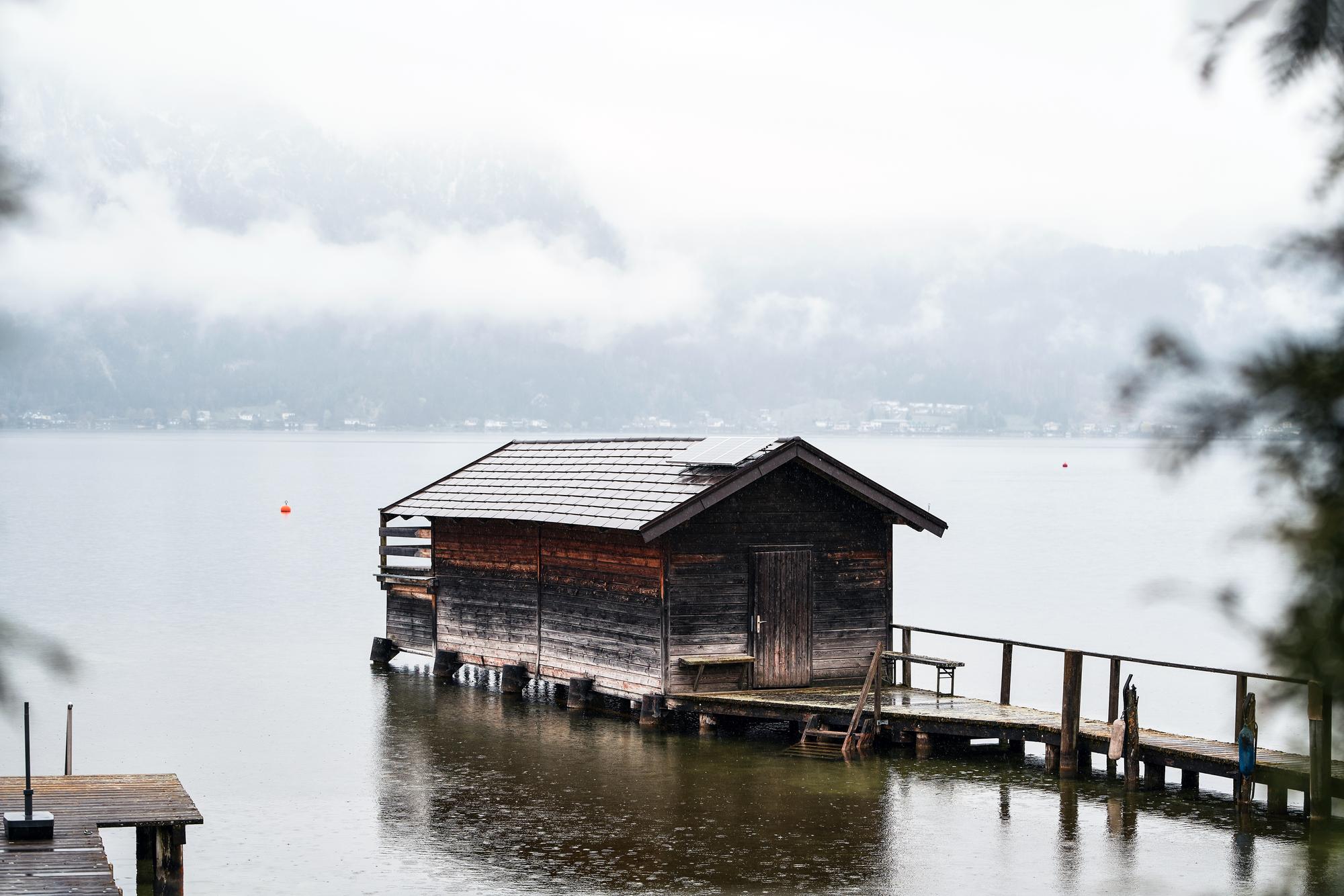
The lake can look wonderfully open on a clear Prairie evening. Light reaches across the water, the shore settles into quiet, and the last boat leaves a long wake behind it. That same openness feels different when clouds build and the wind turns toward the cottage. Suddenly the chairs, lines, and loose paddle beside the dock deserve a second look.
For cottage owners in Manitoba and Saskatchewan, weather protection is part of waterfront ownership. Summer wind tests the way boats are secured. Heavy rain changes the path of runoff. Freeze-up and spring ice create another set of demands, sometimes while nobody is at the property to see them. An expensive installation can still be vulnerable if the shore connection or winter arrangement has been overlooked.
Protecting the investment begins with understanding those weak points. It does not mean trying to make the shoreline immune to weather. It means choosing equipment suited to the setting, keeping its supporting parts in good condition, and having a sensible response when conditions change. Much of that work is quiet and unremarkable. A sound attachment, a clear drainage route, or an early removal booking will rarely become the highlight of a cottage photograph. Yet each can help preserve the place where your family spends its best summer afternoons.
Begin with the weather your shore actually receives
Two properties on the same lake can face very different exposure. One may sit behind a point while another looks across a long stretch of open water. Note the wind directions that make docking difficult and the conditions that send waves toward the landing. Ask neighbours about past events, then combine their experience with observations from your own property.
Use that information when discussing dock configurations. The design needs to work with boat loads, local exposure, shore access, and seasonal handling. A bigger platform is not automatically a stronger or more suitable one. The complete installation matters more than the appearance of any single section.
Pay attention to the parts that hold everything together
Connections and anchoring do much of their work out of sight. They restrain movement and transfer loads while the deck carries people above. Loose hardware, worn components, and unsuitable anchoring can weaken that relationship. A repeated change in alignment should prompt investigation, even if the dock remains usable on a calm day.
Discuss the site’s needs through Nor Col’s anchoring options rather than assuming an anchor arrangement from another property will work. Bottom conditions, water-level range, exposure, and intended use all influence the choice. Avoid making unapproved changes to anchor lines or fittings. More tension or more hardware can create a new problem if it changes how the system is meant to move.
Protect boats without transferring the problem elsewhere
A boat can place substantial demands on a dock during windy conditions. Lines need appropriate attachment points and an arrangement suited to the boat and berth. Inspect them for wear and observe where movement brings the hull close to an edge. Bumpers help manage contact, but they cannot correct an unsuitable mooring arrangement.
Some owners consider a lift or a compatible drive-on boat port to change how the boat is stored. That decision requires matching the equipment to the fully loaded boat, hull, water depth, and exposure. Dry storage does not make a boat stormproof. Ask how the system should be secured and what the manufacturer recommends when severe weather is expected.
Give heavy rain a route that avoids damage
Rain arriving from above can be as troublesome as water arriving from the lake. Watch where runoff travels from roofs, paths, and higher ground. If it collects at the shore landing or washes soil onto the beach, the access route may become unstable. Begin with the source of the water rather than repeatedly filling the same washed-out area.
Maintain suitable vegetation and seek advice before changing drainage, reshaping a bank, or placing material near the water. The DFO dock and mooring guidance is a useful federal reference for relevant waterfront work; local and provincial authorities may also need to be consulted. Erosion solutions require site-specific judgement. A neighbour’s stone treatment is not a reliable design for your shore.
Plan for ice before the first cold warning
Ice can load or move waterfront equipment in ways that differ from ordinary summer waves. That is why a summer-ready installation does not automatically have a winter-ready plan. Confirm whether your particular equipment should be removed and how it must be stored. Use the manufacturer and a local installer to assess the exposure, especially where moving ice has caused trouble before.
Make removal arrangements while access is practical. Clear a storage area, identify lifting needs, and allow time to deal with worn parts. Waiting until freeze-up threatens can leave fewer safe options and fewer available service appointments. A modest amount of autumn planning helps keep winter preparation from becoming a hurried job on a slippery shoreline.
Make preparation possible when you are away
A cottage weather plan should work even when the owner is in the city. Keep dated photographs, equipment details, and service contacts where they are easy to find. Agree on who can assess the property after conditions settle, if someone local is willing to help. Nobody should be expected to go onto an exposed dock during a storm.
Discuss waterfront equipment and seasonal storage with your insurer so you understand the actual policy terms. Keep purchase records and document changes to the installation. After bad weather, photograph damage before repairs where it is safe to do so. Clear records help explain what happened and give an installer a better starting point for restoring the system.
Frequently asked questions
Are floating docks stormproof?
No dock should be treated as stormproof. Performance depends on the equipment, installation, condition, and forces at the site. Choose a suitable system and follow its operating and weather-preparation instructions rather than relying on a broad durability claim.
Should I add more anchors before a storm?
An anchoring change needs qualified advice and should be made in safe conditions. Improvised extra lines or anchors can change how loads move through the dock. Have the system assessed ahead of the season instead of experimenting when bad weather is approaching.
Does taking the boat out remove all waterfront risk?
It removes one source of loading, but the dock and shore access remain exposed. Loose equipment, runoff, and changing water levels can still create problems. Continue inspecting the installation and following its seasonal care plan.
Will insurance pay for weather damage to my dock?
Coverage depends on your policy, the equipment, and the cause of loss. Ask your insurer specifically about docks, lifts, boats, and storage arrangements. Do not assume that cottage-building coverage automatically includes every waterfront item.
Confidence comes from being prepared
Prairie weather is part of the setting that makes these lakes memorable. Protecting your waterfront allows you to enjoy that setting with fewer avoidable worries. When the wind settles and evening light returns, a well-planned shore is ready for the familiar pleasures of a chair by the water and a boat ride before supper.
Nor Col Dock Solutions (formerly Nor Col EZ Dock) serves Central Canada, including Kenora, SK (Saskatchewan), Manitoba, and Northwest Ontario, to strengthen local visibility. Contact our team today on our contact page or follow us on Facebook to start planning your perfect waterfront.