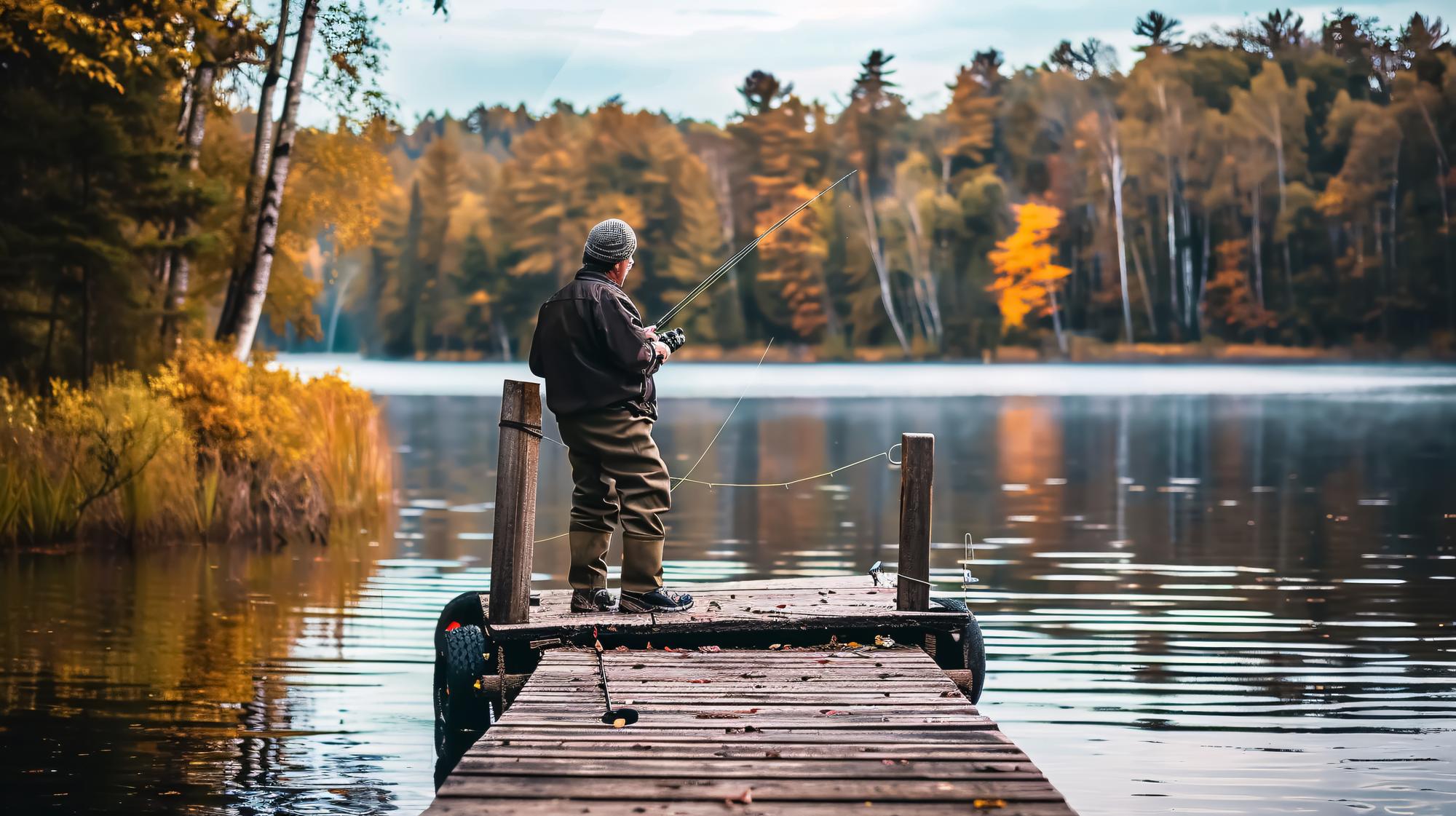
The first cast happens before the cottage wakes up. A mug sits well back from the edge, the tackle box is open beside a chair, and a loon calls somewhere beyond the point. For a few minutes, the only decisions are where to place the lure and whether the ripple near the reeds means anything. Fishing from your own waterfront makes the lake feel especially close.
Later in the morning, the same spot becomes a departure point. Rods go into the boat, someone brings sandwiches, and the landing net needs a place where it will not catch every line. By evening, family members may be swimming near the dock while another angler hopes to make a few quiet casts. A fishing-friendly shoreline has to accommodate all of that, not just look inviting at sunrise.
Across Manitoba and Northwest Ontario, the most useful features are often modest ones. Clear casting room, an uncomplicated route into the boat, and sensible storage can improve each outing. Near Lake of the Woods, a sheltered berth may matter more than a large platform. Elsewhere, a convenient kayak launch may open up the kind of fishing the owner enjoys most. The right setup starts with how you fish, who joins you, and what the waterfront can comfortably support. No dock feature can promise a catch, but thoughtful planning can make the hours around fishing more enjoyable.
Leave space for the cast before adding more features
Casting room is about the area behind and beside the angler as well as the water ahead. Consider branches, railings, chairs, and the routes other people use. A hook moving through a busy walkway creates a problem even when the angler has a fine view of the lake. Choose a spot where fishing can pause easily when somebody needs to pass.
A suitable dock configuration may provide room for a dedicated fishing corner. Keep the site’s loading limits, exposure, and available space in the discussion. The deck should support a comfortable stance without equipment underfoot. A clear surface usually contributes more to a relaxed session than several accessories crowded around the edge.
Make getting into the boat a straightforward job
The fishing day starts more smoothly when passengers can board without reaching around a rod bundle or stepping across a large gap. Look at how the boat sits when it is loaded for an outing. Position lines and protection so the boarding point remains useful, and keep the route from shore clear. A changing water level can alter this relationship over the season.
For suitable boats and sites, a compatible boat port may be one option to explore. Discuss hull fit, total operating weight, required depth, and the space needed to use it. Do not choose equipment based only on the boat’s advertised dry weight. Fuel, batteries, tackle, and other gear are part of the real load.
Give rods and tackle a proper home
Fishing equipment is easier to use when it is organised before the excitement begins. Store rods where tips will not extend into the walkway, and keep tackle containers closed when they are not in use. Choose a dry, secure place for hooks and tools, especially at a family cottage. A loose lure on the deck is easy to miss until somebody walks barefoot.
Think through the return trip as carefully as the departure. Wet nets, muddy footwear, and damp gear need a place to be cleaned or dried without spreading across the dock. A shore-based area can handle much of this work while leaving the waterfront clear. Keep batteries and charging equipment in an appropriate location, with electrical installations assessed by a qualified professional.
Make paddling access useful for fishing days
A fishing kayak often carries more gear than a casual paddling outing. Rod holders, a tackle bag, and a landing net can make entry awkward if the craft moves away from the dock. A planned launch area gives the angler room to load in a sensible order. It also provides a less hurried return when conditions have changed during the outing.
Explore a kayak launch that suits the craft’s dimensions and equipment. Not every fishing kayak will interact with a launch in the same way. Check the manufacturer’s fit guidance and consider where protruding fittings sit. Test the process with the actual boat and the support the user needs rather than assuming a photograph tells the whole story.
Care for the habitat that makes the setting worth visiting
A natural shoreline gives fishing its setting and supports life at the water’s edge. Resist clearing vegetation or altering the lakebed simply to create a wider casting view. Plan access around existing features where possible, and seek site-specific advice before shoreline work. The DFO guidance for residential docks and moorings provides a useful place to begin learning about protecting fish habitat during relevant work.
Make everyday fishing habits equally considerate. Secure packaging, retrieve discarded line, and keep fuel or cleaning products away from the water. Before transporting a boat or gear to another lake, follow that jurisdiction’s current aquatic invasive species instructions. Treating the waterfront carefully helps preserve the setting without making unsupported promises about where fish will gather.
Build comfort into the hours between bites
Fishing from the dock can involve a long period in one position. A suitable chair placed away from the main route makes the wait more comfortable, but it should not block a clear exit or sit precariously at the edge. Keep drinking water, sun protection, and useful layers nearby. Plan shade on shore if the dock does not offer a sensible place for it.
Choose secure dock accessories where they solve a specific access or protection problem. Wear suitable flotation equipment when fishing near or on the water, particularly when conditions are cold or movement is uncertain. Stop when weather, footing, or visibility makes the activity difficult to manage. The pleasure of an evening cast is not improved by staying out after the waterfront has become uncomfortable.
Frequently asked questions
Will a dock help attract fish to my cottage?
Fish location depends on habitat, water conditions, food, and many other factors. A dock should not be presented as a guarantee of better fishing. Plan it for useful access while protecting the natural features around it.
What is the most useful feature for a fishing waterfront?
That depends on whether you mainly cast from shore, use a boat, or fish from a kayak. Clear space and an easy access route benefit most setups. Identify the awkward part of your usual outing before choosing an accessory.
Can we fish and swim beside the same dock?
Those activities need separate space or separate times. Hooks and moving lines do not belong beside swimmers. Agree on a family routine so fishing stops when people enter the casting area or the water nearby.
Does a fishing kayak need a special launch?
A dedicated launch can help, but suitability depends on the kayak and the user’s needs. Check width, hull shape, weight, and attached equipment against the launch guidance. A safe, comfortable entry matters more than the label attached to the product.
Keep the focus on being out there
The best fishing waterfront removes small frustrations without taking attention away from the lake. Gear has a place, the boat is easier to board, and a quiet corner remains available for the first cast. Whether the day brings a full outing or twenty peaceful minutes before breakfast, the waterfront is ready to help you enjoy it.
Nor Col Dock Solutions (formerly Nor Col EZ Dock) services Central Canada, Kenora, SK (Saskatchewan), Manitoba, and Northwest Ontario to strengthen local visibility. Contact our team today on our contact page or follow us on Facebook to start planning your perfect waterfront.