Winter Is Where Most Docks Fail—Not Summer
Most dock decisions get made in July. Warm water. Calm conditions. Everything feels easy. But docks don’t fail in July. They fail in January. Northwest Ontario winters don’t just freeze lakes—they reshape them. Ice expands, shifts, stacks, and drifts. It pushes with a slow, steady force that most dock systems were never designed to handle. And the damage isn’t always dramatic. Sometimes it’s subtle. A twisted frame. A shifted section. Hardware that loosened just enough to become a problem the next season.
By the time you notice it, the damage is already done. If you want your dock to last, you don’t build it for summer—you build it for winter.
Understanding What Ice Actually Does to a Dock
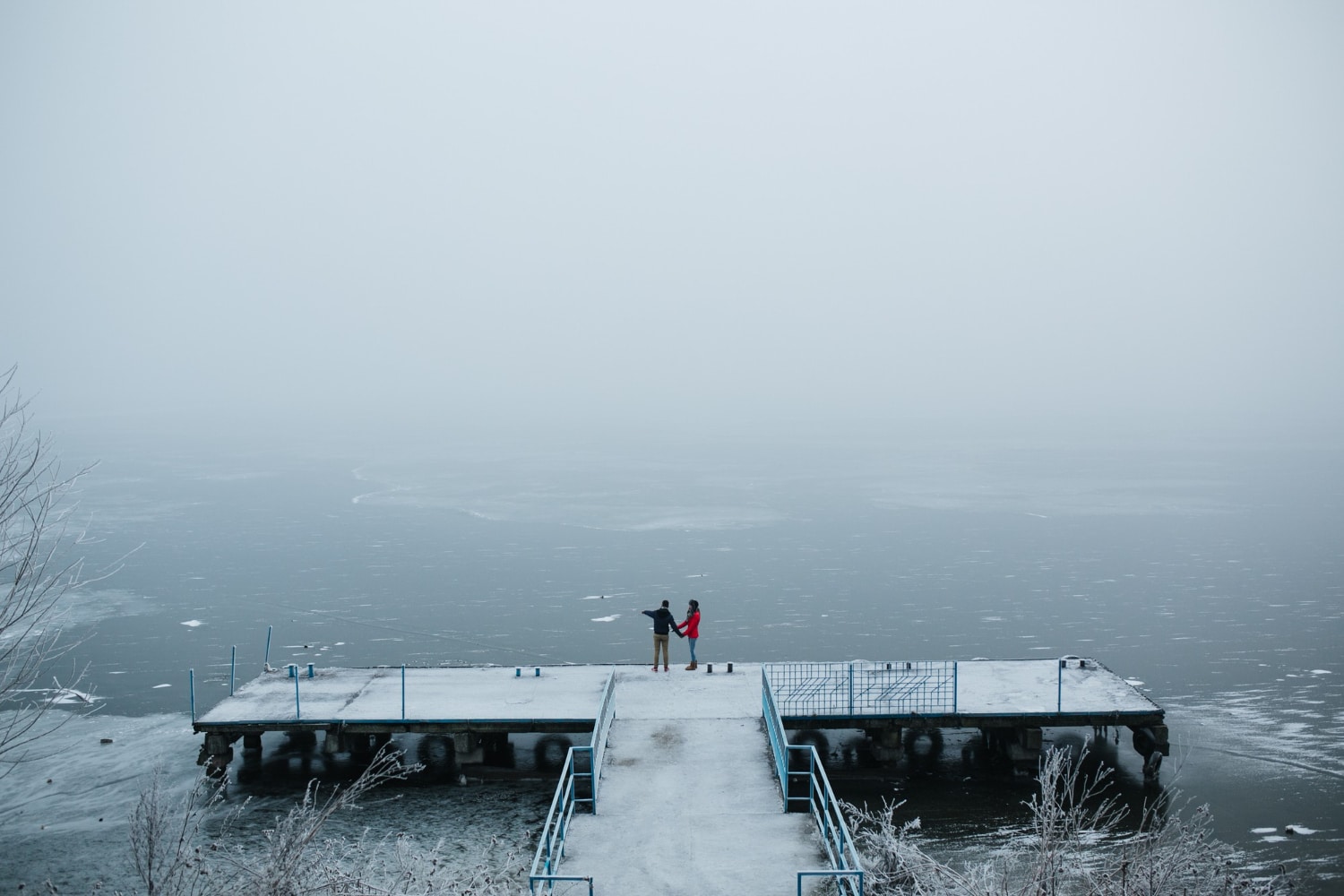
Ice damage isn’t random. It follows patterns. As temperatures drop, water freezes and expands. That expansion creates pressure in every direction. Then wind takes over. Sheets of ice start to move.
They push toward shore and pile up. They grind against anything in their path. Your dock becomes part of that path. This is where people underestimate the force involved. Ice doesn’t need speed to cause damage. It just needs pressure—and time. A dock doesn’t usually snap in half overnight. It gets stressed over weeks. Connections weaken. Sections shift. By spring, what looks “fine” is often compromised.
Why Some Docks Survive—and Others Don’t
The difference usually comes down to one thing:
Was it designed with winter in mind?
Docks that fail are often:
- Left in the water without reinforcement
- Installed in high ice-movement zones
- Built with rigid connections that can’t flex
- Anchored in ways that allow subtle shifting
Docks that survive tend to:
- Be removed before freeze
- Use flexible or modular connections
- Sit in protected areas
- Have anchoring systems that hold position under pressure
It’s not luck. It’s planning.
The Smartest Move: Take It Out Before Freeze-Up
If you can remove your dock, do it. No debate. This is the single most effective way to prevent ice damage. Floating dock systems make this possible. They’re designed to be disconnected, pulled out, and stored until spring. It takes effort, but it saves you from repairs, replacements, and long-term wear. Think about it this way: You can spend a few hours removing your dock… or you can spend weeks fixing it next year.
Most experienced cottage owners learn this lesson once. Then they never leave a dock in again.
When Removal Isn’t an Option
There are situations where taking the dock out isn’t realistic. Maybe it’s too large. Or maybe access is limited. Maybe the system wasn’t designed for it. If that’s the case, you shift from prevention to damage control.
Now your goal is to reduce stress—not eliminate it. Start by reinforcing key connection points. These are where most failures begin. Bolts, joints, and brackets should be tight, corrosion-free, and built to handle movement.
Next, look at how your dock sits in the water. Rigid docks that can’t flex tend to take the full force of ice pressure. Systems with some degree of movement or modular design handle stress better because they can absorb it rather than resist it. It’s the difference between bending and breaking.
Location Matters More Than You Think
Not all shoreline areas experience ice the same way. Some sections of a lake are naturally protected. Others take the full force of wind-driven ice. If your dock sits in a channel or faces prevailing winds, it’s going to see more movement. That means more pressure and more risk. If you have the option, placement alone can reduce damage significantly. Even a slight shift in location—tucking behind a natural break, aligning differently with wind direction—can change how ice interacts with your dock. This is one of those details that’s easy to overlook but makes a real difference over time.
Anchoring: The Hidden Weak Point
A dock doesn’t have to break to fail. It just has to move. Poor anchoring allows subtle shifting during freeze and thaw cycles. That movement compounds stress across the entire structure. By spring, nothing is where it started. Anchoring systems need to match your lakebed conditions:
- Rock requires different solutions than mud or sand
- Depth changes the type and weight needed
- Exposure affects how secure it must be
If your dock moves even slightly under pressure, the rest of the system takes the hit.
What to Check Before Winter Hits
Most damage could be reduced with a simple pre-winter check. Before freeze-up:
- Inspect all connections and tighten hardware
- Look for signs of wear or fatigue
- Check anchoring points
- Remove accessories like ladders or attachments
You’re not trying to make it perfect—you’re trying to remove weak points before they get stressed.
Because once the ice forms, you’re done. There’s nothing to fix until spring.
Spring Inspection: Don’t Skip It
When the ice clears, don’t assume everything is fine. Walk the dock slowly and look for:
- Warping or misalignment
- Loose or stressed connections
- Sections that sit differently in the water
- Hardware that shifted or corroded
Some damage won’t be obvious until you step on it. Fix small issues early. They don’t stay small for long.
The Long-Term Play
If you plan to own your property for years—and most people do—you need to think beyond one season. A dock that survives one winter isn’t the goal. A dock that survives ten is. That usually means:
- Choosing materials that handle freeze/thaw cycles
- Using systems that allow removal or flexibility
- Designing with real lake conditions in mind, not ideal ones
Shortcuts show up later. Always.
The Bottom Line
Ice damage isn’t unpredictable. It’s just underestimated.
If you:
- Plan for winter during the build
- Remove your dock when possible
- Reinforce what stays in
- Pay attention to placement and anchoring
You’ll avoid most of the problems people deal with every spring.
And more importantly, you’ll stop thinking about your dock as something that needs constant attention—and start using it the way it was meant to be used.
If you’re dealing with repeated winter damage or planning a dock that actually lasts in Northwest Ontario conditions, it helps to work with people who understand how these lakes behave.
Nor Col Dock Solutions (formerly Nor Col EZ Dock) services Central Canada, Kenora, SK (Saskatchewan), Manitoba, and Northwest Ontario. If you want to get ahead of winter instead of reacting to it, start here:
https://norcoldocks.com/contact/
https://www.facebook.com/NorColDockSolutions