At most Manitoba cottages, the swim platform becomes the center of everything once summer hits. It’s where kids jump in all afternoon, where adults sit with their feet in the water, and where people gather without even thinking about it.
But here’s the reality—most platforms are either underbuilt, poorly placed, or not designed for how people actually use them.
That’s where problems show up.
Slippery surfaces.
Unstable footing.
Shallow water jumps.
Loose anchoring.
None of those are small issues when people are diving, climbing, and moving around constantly.
If you’re going to build one, it needs to be solid, safe, and built for Manitoba lake conditions—not just something that “works for now.”
Start with the Right Location (This Is Where Most People Mess Up)
Before you think about materials or size, you need to pick the right spot.
This decision controls everything.
Start with water depth. You want enough depth for safe jumping and diving. A general rule is at least 6–8 feet for jumping areas, but always verify your specific lake conditions.
Now check the bottom.
Manitoba lakes aren’t always clean sand. You’re dealing with:
- Rocks
- Weeds
- Mud
- Sudden drop-offs
Get in the water and physically check it. Don’t guess.
Next, look at wave exposure. If your platform sits in a high-wind channel, it will move more, wear faster, and require stronger anchoring.
Calmer water = safer platform + longer lifespan.
Floating vs Fixed Swim Platforms (Don’t Overthink This)
For most Manitoba cottages, floating platforms win. Not even close.
Here’s why:
Floating Platforms
- Adjust with changing water levels
- Stay level even on uneven lakebeds
- Easier to install and remove
- Lower long-term maintenance
Fixed Platforms
- Require stable lakebed conditions
- Don’t adjust to water changes
- Take more effort to install
- Can become unsafe if water levels shift
Given how much water levels fluctuate in Manitoba, floating systems are usually the smarter move.
How Big Should Your Swim Platform Be?
This is where people either go too small… or completely overbuild.
Start simple:
How many people will realistically use it at once?
A good baseline:
- Small (8×8 or 10×10): Light use, quick swimming access
- Medium (12×12): Family use, room to sit and move
- Large (16×16+): Entertaining, multiple users, lounging
If you’ve got kids, guests, or any kind of social activity, don’t go small.
Crowded platforms = unsafe platforms.
Give people space to move without stepping on each other.
Safety Features You Should Not Skip
This isn’t optional. This is where most DIY builds fall apart.
1. Non-Slip Surface
Wet docks get slick. Fast.
You need textured or composite surfaces that provide grip.
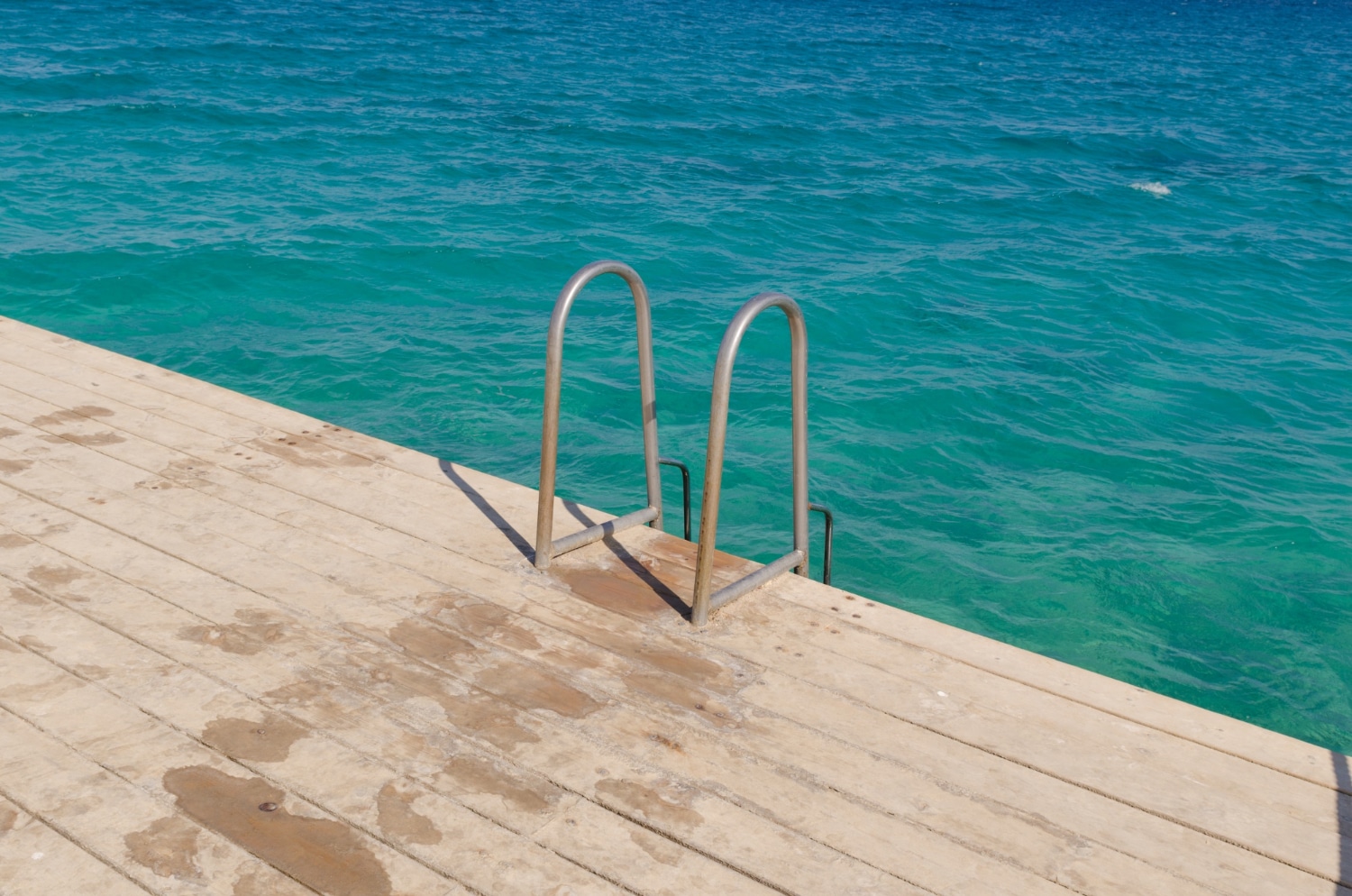
2. Swim Ladder (A Good One)
Not the cheap, narrow kind.
You want:
- Wide steps
- Easy angle
- Deep enough reach
People should be able to climb out without struggling.
3. Rounded or Clean Edges
Sharp corners + wet movement = injuries.
4. Stability Under Load
Your platform shouldn’t wobble when 2–3 people move at once.
If it shifts, flexes, or dips too much—it’s not built right.
Anchoring: The Part That Keeps Everything in Place
You can build a perfect platform… and ruin it with bad anchoring.
Your anchoring system needs to match:
- Lake depth
- Bottom type (rock, sand, mud)
- Wave exposure
Common options:
- Concrete anchors
- Screw anchors
- Weighted systems
In Manitoba, wind and storms can move a poorly anchored platform fast.
If it drifts, rotates, or loosens—you’re constantly fixing it.
Do it right once.
Materials That Actually Hold Up in Manitoba
You’ve got two main directions:
Wood
- Looks great
- Lower upfront cost
- Requires ongoing maintenance
- Can warp, rot, or get slippery
Aluminum / Composite
- Higher upfront cost
- Minimal maintenance
- Resistant to rot, corrosion, and sun damage
- Better long-term investment
Most serious cottage owners eventually move away from wood because of the upkeep.
If you don’t want yearly work, go composite or aluminum.
Seasonal Reality: Build for Summer, Plan for Winter
This is Central Canada. Winter is not a small factor.
Ice doesn’t just freeze—it moves, expands, and destroys.
Your options:
Remove the platform (best option)
- Extends lifespan
- Prevents damage
- Easier with modular floating systems
Leave it in (higher risk)
- Requires heavy-duty design
- Still vulnerable to ice pressure
If you can remove it, remove it.
Simple decision.
Think About How People Actually Use It
This is where most builds fall short—they’re designed for looks, not use.
Ask yourself:
- Where will people sit?
- Where will they jump?
- Where will they enter/exit?
- Will kids be using it daily?
A good platform has clear zones, even if it’s not obvious:
- Jump area
- Ladder access
- Sitting space
If everything overlaps, it becomes chaotic fast.
Maintenance: Keep It Simple or You Won’t Do It
Every dock needs some level of maintenance.
The question is how much.
At minimum, plan to:
- Check anchors each season
- Inspect connections and hardware
- Clean surfaces
- Look for wear or movement
If your system requires constant repair, it’s the wrong system.
The Bottom Line
A swim platform should feel effortless when you use it.
It should be:
- Stable
- Safe
- Easy to access
- Built for your lake conditions
If you’re thinking about it all the time—something’s wrong.
The goal is simple: build it once, enjoy it for years.
If you’re not sure what direction makes sense for your specific shoreline, it helps to work with people who understand these lakes.
Nor Col Dock Solutions (formerly Nor Col EZ Dock) services Central Canada, Kenora, SK (Saskatchewan), Manitoba, and Northwest Ontario. If you’re planning a swim platform or upgrading your dock setup, you can start here:
https://norcoldocks.com/contact/
https://www.facebook.com/NorColDockSolutions