Why Prairie Wind Changes Everything
Prairie lakes do not behave like small, protected shorelines. With wide-open water and long wind fetch, even moderate wind can build into steady wave action that pounds docks for hours at a time. Conditions can shift quickly, and what starts as a calm morning often turns into rolling water by mid-afternoon. That constant change exposes weaknesses in dock design faster than most people expect.
In regions like Saskatchewan and Manitoba, wind is not an occasional factor—it is part of the environment. Any dock system placed in these conditions needs to handle movement, pressure, and seasonal changes without breaking down.
How Stationary Docks Handle Wind Pressure
A stationary dock is fixed in place, typically supported by posts or legs driven into the lakebed. In calm or sheltered water, this creates a solid and stable platform that feels dependable underfoot. There is little to no movement, which many people prefer when stepping onto the dock or moving around it.
The challenge shows up when wind and waves start applying force to that fixed structure. Because the dock cannot move with the water, it absorbs the impact instead. Over time, that repeated stress works against the system. Posts begin to shift, hardware loosens, and connection points weaken. The damage is often gradual, which makes it easy to overlook until something finally fails.
Water level changes add another layer of difficulty. A stationary dock sits at a fixed height, so when water rises or drops, usability changes with it. That can make getting in and out of boats more difficult and, in some cases, less safe.
How Floating Docks Adapt to Movement
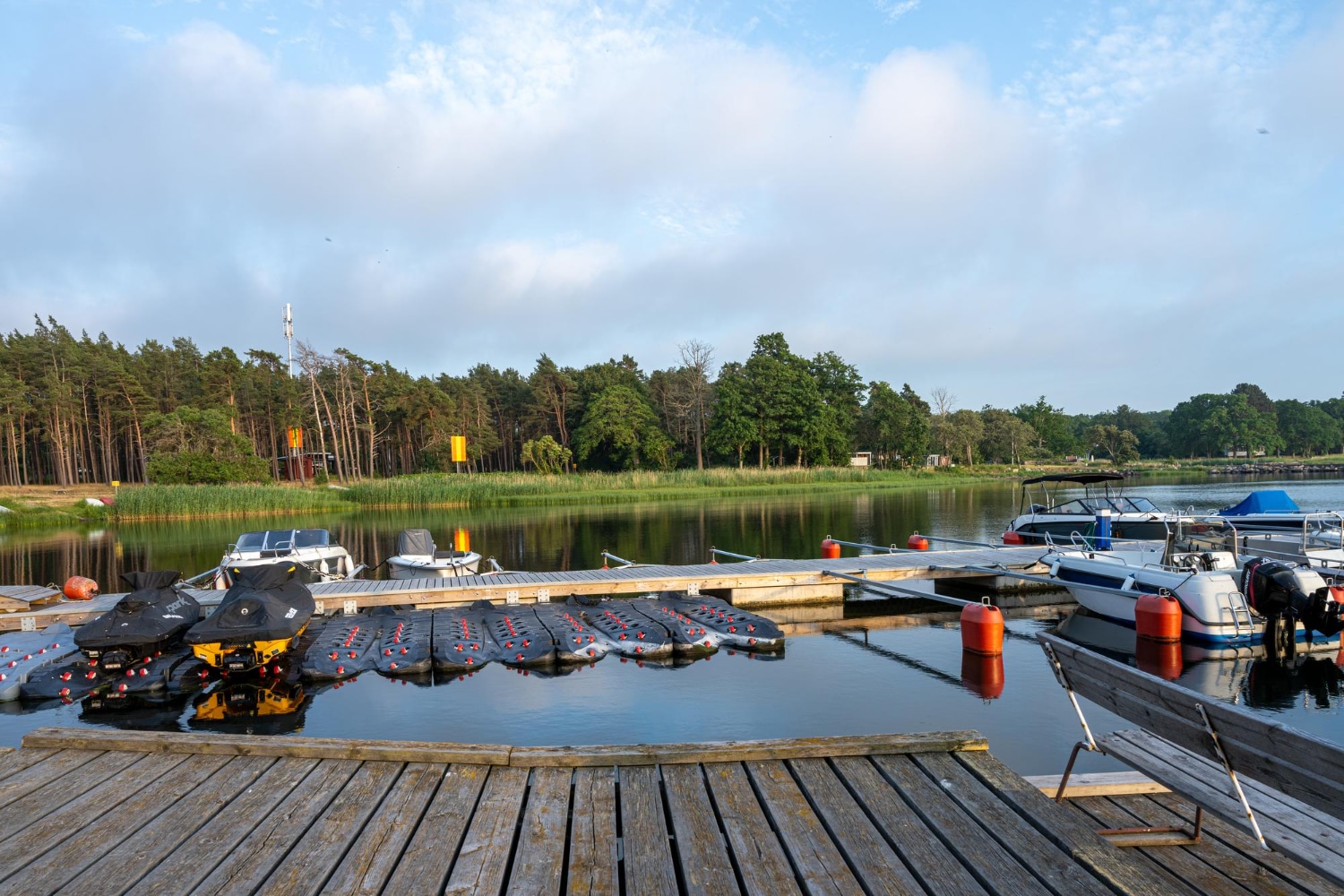
Floating docks take a different approach. Instead of resisting movement, they are designed to move with the water. As waves roll through or water levels shift, the dock rises and falls naturally. This reduces the stress placed on the structure and spreads the load more evenly across the system.
In prairie wind conditions, that flexibility becomes a major advantage. Rather than taking the full force of every wave, the dock adjusts with it. The result is less strain on connections, fewer structural issues, and a longer overall lifespan.
This does not mean floating docks are automatically stable in every situation. Poor anchoring or bad layout can lead to drifting or excessive movement. But when properly designed and secured, a floating dock handles changing conditions more effectively than a rigid system.
The Role of Anchoring in Wind Stability
No dock system performs well without proper anchoring, but it becomes even more critical in open-water environments. Wind-driven waves create constant pressure, and that force has to be managed somewhere.
For stationary docks, anchoring is built into the structure through posts or supports. If those shift, the entire dock is affected. For floating docks, anchoring systems must be designed to hold position while still allowing controlled movement.
When anchoring is done right, a floating dock stays aligned and predictable, even in rougher conditions. When it is done poorly, movement becomes exaggerated and uncomfortable. This is often where the difference between a good system and a frustrating one becomes clear.
Long-Term Wear and Structural Stress
Over multiple seasons, the way a dock handles stress becomes more important than how it feels on day one. Stationary docks concentrate stress at fixed points, especially where posts meet the lakebed and where sections connect. In windy environments, those areas take repeated impact, which leads to gradual wear and eventual repairs.
Floating docks distribute stress differently. Because they move with the water, they avoid many of the sharp force points that cause damage in rigid systems. This typically results in slower wear and fewer major repairs over time.
For remote cabins or less frequently visited properties, that difference matters. Fewer repairs mean fewer trips, less maintenance, and more reliable performance.
Winter Ice and Seasonal Impact
Winter conditions across Central Canada add another level of stress. Ice expansion, shifting, and pressure can be severe enough to move or damage dock systems that are left in place.
Stationary docks are especially vulnerable because they are locked into position. Ice can push against posts, lift sections, or twist the structure out of alignment. Even if the dock survives the winter, it often requires adjustment or repair in the spring.
Floating docks, particularly those designed for seasonal removal, avoid much of this damage. By pulling sections out before freeze-up or repositioning them away from pressure zones, owners can extend the life of their dock significantly.
Day-to-Day Use and Stability
From a user standpoint, the difference between the two systems comes down to feel and function. Stationary docks offer a firm, unmoving surface, which can feel more stable at first. Floating docks have slight movement, but when designed properly, that movement is controlled and predictable.
Most people adjust quickly to a floating dock, especially when they see how it performs in changing conditions. The trade-off is clear: a small amount of movement in exchange for better durability and adaptability.
Choosing the Right Dock for Prairie Conditions
The decision between floating and stationary docks is not about which one is better in general. It is about which one fits the environment you are dealing with.
In protected, low-impact areas, a stationary dock can work without major issues. But across open prairie lakes, where wind and water are constantly in motion, floating docks tend to perform better over time.
They handle fluctuation more naturally, reduce structural stress, and offer more consistent usability as conditions change.
Final Thoughts
Prairie wind exposes weak dock design quickly. Systems that cannot adapt will eventually show it through wear, movement, or failure. Choosing a dock that works with the environment instead of against it makes a significant difference in both performance and lifespan.
If you are weighing your options and want a dock that holds up in real conditions, it helps to work with people who understand these lakes firsthand. Nor Col Dock Solutions (formerly Nor Col EZ Dock) services Central Canada, Kenora, SK (Saskatchewan), Manitoba, and Northwest Ontario.
You can learn more or get started here:
https://norcoldocks.com/contact
https://www.facebook.com/NorColDockSolutions