If you spend any time around cottages in Whiteshell, you start to notice a pattern. A lot of docks look good from the shore… but don’t actually work once people start using them. Too narrow. Too crowded. No clear space to move. People stepping over each other just to get in the water. The problem usually isn’t size—it’s layout. When a dock isn’t designed for how a family actually uses it, it turns into friction. And at a busy cottage, friction shows up fast.
Kids running, people docking boats, others trying to sit and relax—if everything overlaps, it gets chaotic. A good dock layout solves that before it starts.
Think Movement First, Not Shape
Most people start by asking, “Should I do an L-shape or a U-shape?” That’s the wrong starting point. The better question is:
How are people going to move on this dock?
At a family cottage, movement is constant:
- Kids jumping in and climbing out
- Boats coming and going
- People walking back and forth
- Others sitting and not moving at all
If those paths cross too much, the dock feels crowded even if it’s big. A strong layout separates movement naturally, without needing rules.
The Real Reason L-Shaped Docks Work So Well
There’s a reason you see L-shaped docks everywhere in Whiteshell.
They’re not trendy—they just work. An L-shape creates a natural split:
- One side becomes the activity zone (swimming, ladder, jumping)
- The other becomes the transition zone (walking, docking, moving through)
That small separation changes everything. Instead of people constantly interrupting each other, the dock starts to flow. You don’t need to tell kids where to jump. They just gravitate to the right spot. That’s what a good layout does—it guides behavior without forcing it.
When a Straight Dock Starts to Break Down
Straight docks are fine—until they’re not.
They work well for:
- Simple access
- Smaller cottages
- Low traffic
But once you add:
- More people
- Boats
- Swimming activity
They start to fail.
Everything happens in one line:
- People walking
- People sitting
- People entering the water
There’s no separation. No breathing room. And that’s when it starts to feel cramped, even if technically there’s space.
U-Shaped Layouts: Great for the Right Situation
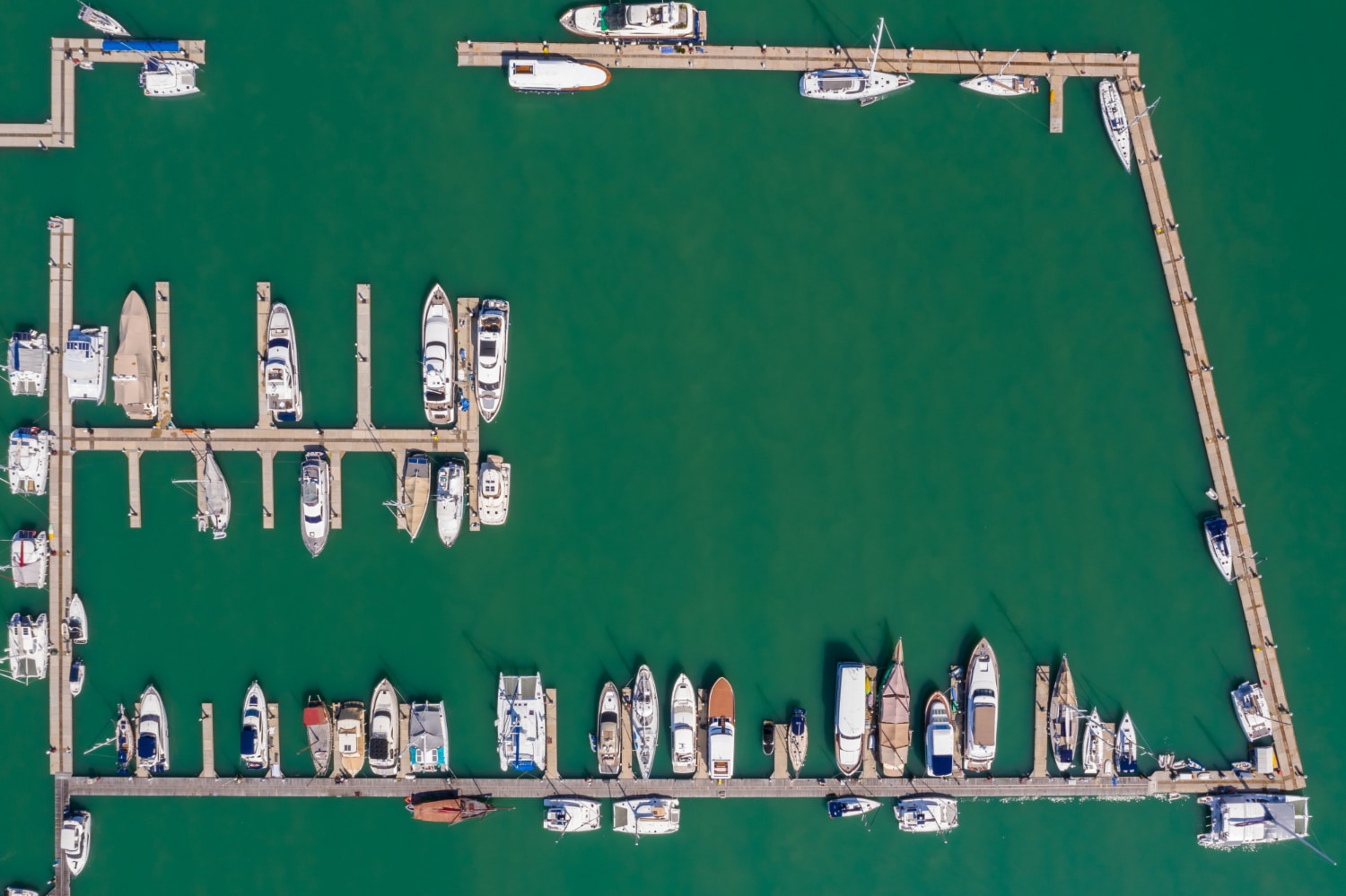
A U-shaped dock is a different level. It’s not just about space—it’s about control. When done right, it creates:
- Protected water inside the “U”
- Multiple docking points
- Clear separation between boating and swimming
For busy cottages with multiple boats or a lot of traffic, this layout can make life easier. But it’s not for everyone. It takes more space, more planning, and more shoreline to make it work properly. If your property supports it, though, it’s one of the most functional setups you can build.
The Role of Platform Space (This Is What Changes Everything)
No matter the shape, one thing consistently separates good docks from great ones:
Platform space.
That’s the area where people actually stop moving. Sit. Talk. Watch the kids. Dry off. Without it, your dock becomes a hallway instead of a destination. Even adding a single wider section—something like a 10×10 or 12×12 area—can completely change how the dock feels. It gives people a place to be, not just pass through. And once you have that, the rest of the layout starts to make more sense.
Designing for Kids Without Making It Obvious
At family cottages, kids drive a lot of the dock usage. But you don’t want a design that feels like it’s “for kids.” You want something that naturally works for them. That usually means:
- Easy water entry and exit
- Clear jump zones
- Enough space to move without bumping into adults
When those things are built into the layout, kids don’t need direction. They just use the dock as intended. And more importantly, it stays safer without constant supervision.
Boat Traffic Shouldn’t Disrupt Everything Else
One of the biggest layout mistakes is putting docking space right in the middle of everything.
Now every time a boat comes in or out:
- People have to move
- Activity stops
- The whole dock shifts
A better layout pushes docking slightly off to the side. Not far away—just enough that it doesn’t interrupt the main flow. That way:
- Boats come and go
- Swimming continues
- People sitting don’t have to move
It sounds simple, but it makes a big difference over a full season.
Width Is What Makes a Dock Feel Calm
Length gets attention. Width changes the experience. A narrow dock forces people into each other’s space. A wider dock:
- Lets people pass without thinking
- Creates room for seating
- Reduces that “busy” feeling, even with more people
If your dock is going to be used heavily, width is one of the easiest ways to improve it without redesigning everything.
Lighting and Small Details That Actually Matter
Once the layout is right, the smaller details start to stand out. Lighting is one of them. Even simple solar lights:
- Define edges
- Improve visibility
- Make the dock feel more finished
It’s not about aesthetics—it’s about usability. Same with things like:
- Ladder placement
- Entry points
- Transitions between sections
When those feel natural, the whole dock feels better.
The Goal Isn’t Bigger—It’s Better Flow
A lot of people assume the solution is to just build a bigger dock.
That’s not usually the answer.
A well-designed layout:
- Feels open without being oversized
- Handles more people without feeling crowded
- Supports multiple activities without conflict
That’s what you’re aiming for.
Not size—flow.
The Bottom Line
At a busy family cottage, your dock isn’t just a structure. It’s where everything happens. If the layout works:
- People spread out naturally
- Activities don’t collide
- The space feels easy to use
If it doesn’t:
- It feels crowded
- People get in each other’s way
- You’re constantly adjusting instead of relaxing
The difference isn’t dramatic—it’s intentional.
If you’re looking at your current setup and something just feels off, it’s usually not the size—it’s the layout.
Nor Col Dock Solutions (formerly Nor Col EZ Dock) services Central Canada, Kenora, SK (Saskatchewan), Manitoba, and Northwest Ontario. If you want a dock that actually works the way your cottage is used, start here:
https://norcoldocks.com/contact/
https://www.facebook.com/NorColDockSolutions